
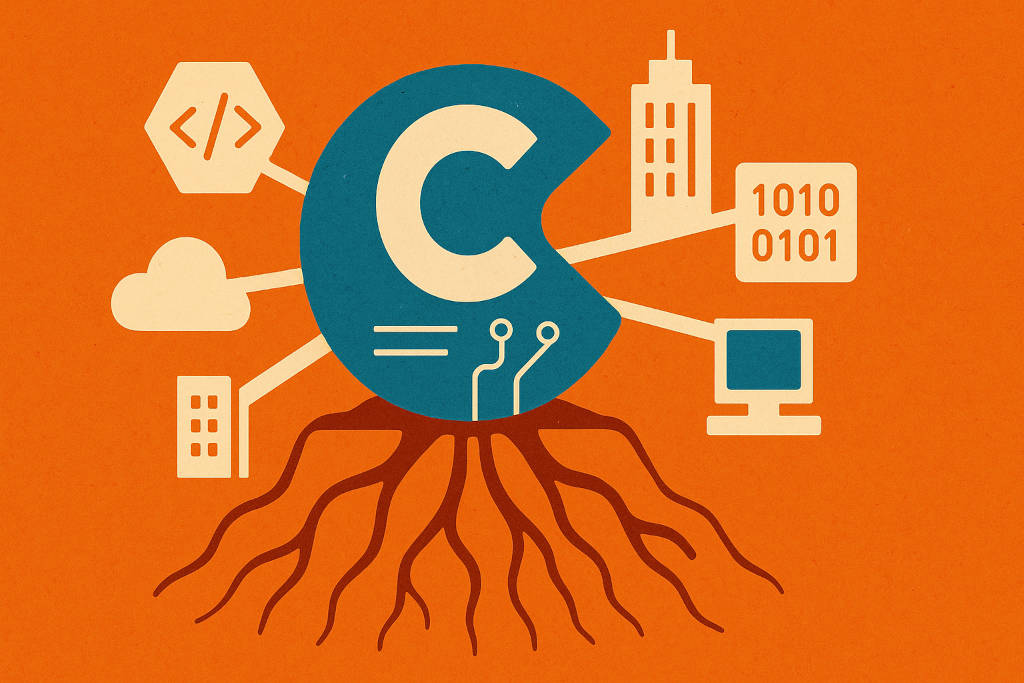
C, C++, C#, and the Evolution of Software Engineering: The Biography of Languages Behind Seamless, Useful, and Secure Code
The Birth of a Programming Family
In the history of computer science, few families of programming languages have influenced software development as deeply as C, C++, and C#. Their story is the biography of a technological lineage—a family of languages that helped transform computers from specialized machines into the foundation of modern digital life.
Each member entered the world during a different era, carrying forward lessons from the previous generation.
C was the foundation builder, teaching computers how to work closely with hardware.
C++ became the bridge between efficiency and modern software design.
C# emerged as the enterprise engineer, creating powerful applications through the .NET ecosystem.
Together, they shaped the development of operating systems, games, embedded devices, enterprise platforms, cloud services, and secure applications.
Their shared mission was clear:
Create software that is efficient, functional, reliable, and capable of solving real-world problems.
Chapter One: C — The Foundation Architect
The first member of the family was C, created in the early 1970s by Dennis Ritchie at Bell Labs.
C was born during a time when programmers needed a language that could communicate efficiently with computer hardware while still providing higher-level programming features.
Before C, software development often required writing instructions in low-level assembly languages. C introduced a new balance: developers could write understandable code while maintaining close control over memory and system resources.
C became the language of foundations.
It helped create:
operating systems,
device drivers,
embedded systems,
databases,
networking software.
One of its greatest achievements was helping build the UNIX operating system, which influenced generations of computing platforms.
If programming languages were people, C would be the engineer who designed the foundation of the city before anyone built on top of it.
Chapter Two: C and the Art of Efficient Coding
C introduced important concepts that continue to influence modern software engineering:
direct memory management,
structured programming,
performance optimization,
portability across different systems.
These abilities allowed developers to create software that ran quickly and efficiently.
However, C also required careful attention. Because programmers had direct control over memory, mistakes could create problems such as:
memory leaks,
buffer overflows,
security vulnerabilities.
This taught an important lesson that continues today:
Powerful programming requires responsibility.
The relationship between efficiency and security became a central theme in software development.
Chapter Three: C++ — The Builder of Modern Software
As software systems became larger, developers needed ways to manage complexity.
In the 1980s, Bjarne Stroustrup developed C++, originally known as “C with Classes.”
C++ expanded the abilities of C by introducing object-oriented programming concepts.
It allowed developers to organize software into reusable components called objects.
C++ became known for combining:
the performance of C,
the organization of object-oriented design,
advanced programming techniques.
This made it valuable for building complex systems such as:
video games,
graphics engines,
financial software,
scientific applications,
browsers,
high-performance computing systems.
C++ became the architect of large software structures.
Where C built the foundation, C++ designed the buildings.
Chapter Four: The Connection to Functional and Useful Software
C and C++ helped establish many principles behind functional and useful software.
Good software must do more than run—it must solve problems effectively.
These languages encouraged developers to focus on:
Performance
Programs must use computing resources wisely.
C and C++ allow fine control over:
memory,
processing power,
hardware interaction.
This makes them valuable for applications where speed matters.
Reusability
C++ introduced object-oriented approaches that helped developers create reusable components.
Reusable code improves:
productivity,
consistency,
maintainability.
Reliability
Large software systems require predictable behavior.
Careful design of:
data structures,
algorithms,
memory management,
helps create dependable applications.
Chapter Five: C# — The Enterprise Engineer
At the beginning of the 21st century, another member of the family arrived: C#.
Created by Microsoft and led by Anders Hejlsberg, C# became one of the primary programming languages of the .NET platform.
C# inherited ideas from C and C++ but introduced a more managed and developer-friendly environment.
Unlike traditional C programming, where developers manually controlled memory, C# used the .NET runtime to manage many complex tasks automatically.
This allowed developers to focus more on application design and less on low-level system management.
C# became a major language for:
web applications,
enterprise software,
cloud services,
desktop applications,
mobile development,
game development.
If C was the foundation engineer and C++ was the architect, C# became the modern construction manager organizing large digital projects.
Chapter Six: The Web Programming Connection
As the internet evolved, these languages found important roles in web development.
C
C influenced web infrastructure through:
server software,
networking systems,
performance-critical services.
Many technologies that support the web depend on concepts originally developed with C.
C++
C++ became important for:
browser engines,
graphics processing,
high-performance web applications,
backend systems requiring speed.
C#
Through ASP.NET and the .NET ecosystem, C# became a major force in web programming.
Developers used C# to create:
websites,
APIs,
enterprise portals,
cloud applications,
online business systems.
C# connected powerful programming concepts with modern web development practices.
Chapter Seven: Security and the Responsibility of Code
Security became one of the most important chapters in the biography of these languages.
Software today protects:
financial information,
personal data,
business systems,
critical infrastructure.
C and C++ taught developers the importance of careful memory management and secure coding practices.
C# introduced managed environments that reduced certain categories of programming errors.
All three languages contributed to security through:
strong software architecture,
careful input handling,
authentication systems,
encryption libraries,
secure development practices.
The lesson was clear:
Reliable software is built by combining technical power with responsible engineering.
Chapter Eight: The Personalities of the Programming Family
If these languages were people, their biographies would describe a remarkable family.
C — The Foundation Builder
C would be the engineer who understands the machine itself.
It values:
efficiency,
control,
simplicity,
performance.
C++ — The Master Architect
C++ would be the designer of complex systems.
It values:
flexibility,
abstraction,
organization,
performance.
C# — The Modern Professional
C# would be the enterprise specialist.
It values:
productivity,
safety,
scalability,
developer experience.
Chapter Nine: A Legacy That Continues
The story of C, C++, and C# is the story of software evolution itself.
They represent different generations of programming philosophy:
C taught computers to be controlled efficiently.
C++ taught developers to manage complexity.
C# taught teams to build modern applications quickly and safely.
Their influence can be found everywhere—from operating systems and video games to websites, cloud platforms, and enterprise software.
Their greatest achievement is not a single application or invention. Their legacy is the millions of developers who use their ideas to create technology that is faster, more useful, and more secure.
The biography of C, C++, and C# is ultimately the story of humanity learning how to communicate with machines—and how to turn that communication into the digital world around us.
 129400