Shifting Business Priorities Are Redefining the Learning & Development Landscape
In today’s rapidly evolving business environment, Learning and Development (L&D) is undergoing a profound transformation. Once considered a support function focused primarily on compliance training and onboarding, L&D has become a strategic driver of organizational performance, innovation, and resilience. This shift is not happening in isolation; it is being fueled by changing business priorities, technological disruption, workforce expectations, and economic pressures. As organizations adapt to these forces, the L&D landscape is being fundamentally redefined.
The Shift from Support Function to Strategic Partner
Historically, L&D was often viewed as a cost center—responsible for delivering training programs but rarely tied directly to business outcomes. Today, that perception is changing. Organizations increasingly recognize that workforce capability is a critical determinant of success, particularly in a knowledge-driven economy.
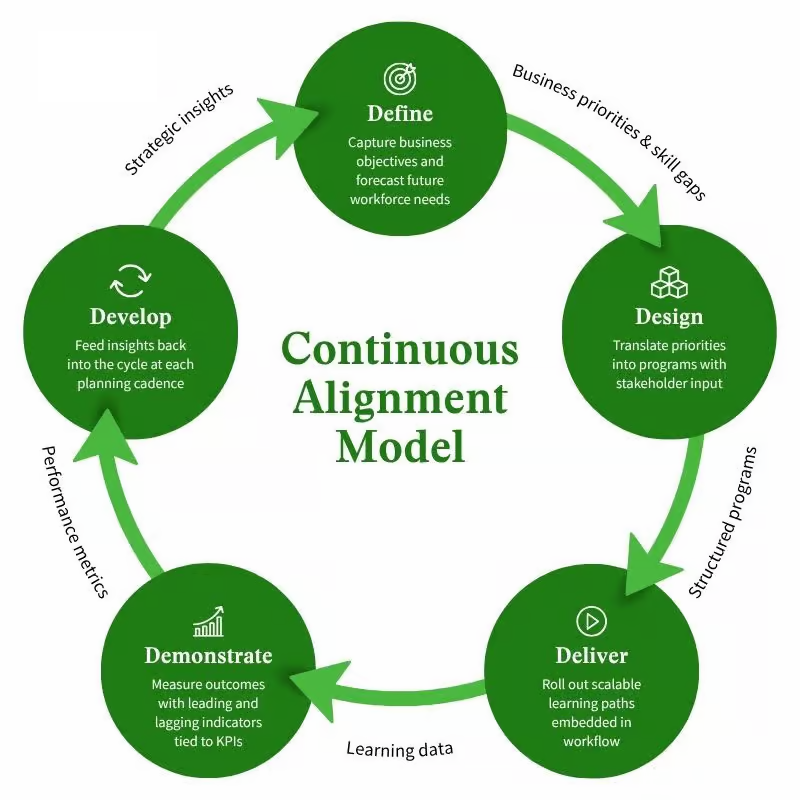
Modern L&D teams are now expected to align closely with business strategy, ensuring that learning initiatives directly support organizational goals. This includes driving revenue growth, improving operational efficiency, and enhancing employee retention. According to recent insights, L&D has evolved into a “business-critical driver of growth, agility, and retention,” reflecting its expanded role in shaping organizational success.
This shift has elevated L&D professionals to strategic partners within the enterprise. They are no longer just facilitators of training but architects of capability-building ecosystems that enable organizations to compete in dynamic markets.
The Rise of Skills as the New Currency
One of the most significant shifts redefining L&D is the growing emphasis on skills. In a world where job roles are constantly evolving due to automation and digital transformation, traditional qualifications are no longer sufficient indicators of capability.
Organizations are increasingly adopting a skills-first approach, focusing on what employees can do rather than what credentials they hold. This shift requires L&D teams to design learning experiences that build measurable, job-relevant skills rather than simply delivering content.
Skill-based learning paths, competency frameworks, and continuous assessment mechanisms are becoming standard practice. This approach not only enhances individual performance but also enables organizations to respond more effectively to changing market demands.
At the same time, the urgency to close skill gaps is intensifying. Reports indicate that skill shortages and the pace of technological change are among the biggest challenges facing L&D leaders today, underscoring the need for continuous upskilling and reskilling initiatives.
Technology as a Catalyst for Transformation
Technology is playing a central role in reshaping the L&D landscape. Advances in artificial intelligence (AI), data analytics, and immersive technologies are enabling more personalized, scalable, and effective learning experiences.
AI, in particular, has moved from being a supplementary tool to a core component of L&D strategy. It is now used to personalize learning journeys, automate content creation, and provide real-time feedback. In many organizations, AI has become the infrastructure layer of learning, enabling adaptive and data-driven experiences.
In addition to AI, technologies such as virtual reality (VR) and augmented reality (AR) are transforming how employees learn by providing immersive, hands-on experiences. These technologies improve knowledge retention and allow learners to practice skills in realistic environments.
The growth of digital learning platforms has also been significant. The global eLearning market is expanding rapidly, driven by the demand for flexible, accessible learning solutions. Digital learning offers higher retention rates compared to traditional methods, further reinforcing its value in modern L&D strategies.
From Content Delivery to Performance Enablement
Another key shift in the L&D landscape is the move from content-centric approaches to performance-focused learning. Traditional training programs often emphasized knowledge acquisition, but organizations now require learning to translate into measurable performance improvements.
This has led to the adoption of performance enablement models, where learning is integrated into the flow of work. Instead of attending isolated training sessions, employees access learning resources at the point of need, enabling immediate application.
Microlearning, just-in-time learning, and workflow-integrated learning are becoming increasingly popular. These approaches ensure that learning is relevant, timely, and aligned with real-world tasks.
Moreover, organizations are placing greater emphasis on measuring the impact of learning. L&D teams are expected to demonstrate return on investment (ROI) by linking learning outcomes to business metrics such as productivity, revenue, and customer satisfaction. However, many organizations still struggle with this aspect, highlighting an ongoing challenge in the field.
Personalization and Learner-Centric Design
Modern learners expect personalized experiences that cater to their individual needs, preferences, and career goals. This expectation is reshaping how L&D programs are designed and delivered.
Personalization is now a cornerstone of effective L&D strategies. By leveraging data and AI, organizations can create tailored learning paths that adapt to each learner’s skill level, role, and learning style. This not only improves engagement but also enhances learning outcomes.
Learner-centric design also emphasizes flexibility and accessibility. With the rise of remote and hybrid work models, employees need learning solutions that can be accessed anytime, anywhere. Mobile learning, on-demand content, and self-directed learning platforms are becoming essential components of modern L&D ecosystems.
The Integration of Learning into Organizational Culture
As business priorities shift toward agility and innovation, learning is becoming embedded in organizational culture. Continuous learning is no longer optional; it is a necessity for staying competitive.
Organizations are fostering learning cultures that encourage curiosity, experimentation, and knowledge sharing. This involves creating environments where employees feel empowered to take ownership of their development and where learning is integrated into daily work activities.
Leadership plays a crucial role in this transformation. Managers are increasingly expected to act as coaches and facilitators of learning, supporting their teams in developing new skills and adapting to change.
This cultural shift also aligns with the broader trend of employee experience. Organizations recognize that providing meaningful development opportunities is key to attracting and retaining top talent. Employees are more likely to stay with organizations that invest in their growth and provide clear career pathways.
Data-Driven Decision Making in L&D
The increasing availability of data is enabling L&D teams to make more informed decisions. Learning analytics provide insights into learner behavior, program effectiveness, and skill development.
Data-driven L&D strategies allow organizations to identify skill gaps, optimize learning programs, and measure impact more effectively. This shift toward evidence-based decision making is critical for demonstrating the value of L&D to business stakeholders.
However, leveraging data effectively requires robust systems and capabilities. Many organizations are still in the early stages of developing advanced analytics capabilities, highlighting an area for future growth.
Agility and Adaptability as Core Priorities
In a rapidly changing business environment, agility has become a top priority for organizations. L&D plays a crucial role in enabling this agility by equipping employees with the skills needed to adapt to new challenges.
Agile learning approaches emphasize flexibility, iteration, and responsiveness. Instead of long, static training programs, L&D teams are adopting shorter, more dynamic learning cycles that can be quickly updated based on changing needs.
This approach aligns with the broader shift toward agile business practices, where organizations continuously adapt to market conditions and customer demands.
The Expanding Scope of L&D Responsibilities
As L&D becomes more strategic, its scope is expanding beyond traditional training functions. L&D teams are now involved in areas such as talent management, leadership development, and organizational transformation.
They are also playing a key role in supporting digital transformation initiatives by ensuring that employees have the skills needed to leverage new technologies effectively.
In addition, L&D is increasingly focused on fostering innovation and creativity within organizations. By encouraging continuous learning and experimentation, L&D helps create environments where new ideas can flourish.
Challenges and Opportunities Ahead
While the transformation of L&D presents significant opportunities, it also comes with challenges. Organizations must navigate issues such as limited resources, resistance to change, and the complexity of measuring impact.
The rapid pace of technological change also requires continuous adaptation. L&D teams must stay up to date with emerging technologies and trends to remain effective.
Despite these challenges, the future of L&D is full of potential. Organizations that successfully align L&D with business priorities will be better positioned to navigate uncertainty and achieve sustainable growth.
Conclusion
The L&D landscape is being reshaped by shifting business priorities, technological advancements, and evolving workforce expectations. What was once a support function has become a strategic imperative, central to organizational success.
As businesses continue to navigate an increasingly complex and dynamic environment, the role of L&D will only grow in importance. By focusing on skills development, leveraging technology, and aligning with business goals, L&D can drive meaningful impact and help organizations thrive in the future of work.
Ultimately, the redefinition of L&D is not just about improving learning outcomes—it is about enabling organizations to adapt, innovate, and succeed in a world where change is the only constant.
 13793
13793