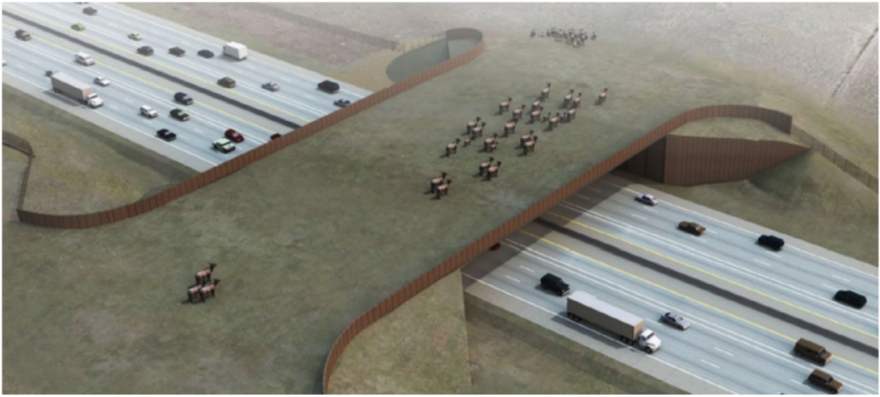
Colorado’s Largest Wildlife Overpass: A Lifeline forWildlife on the Move
Across Colorado, where snow-capped mountains meet vast grasslands and open valleys, wildlife has long depended on the ability to roam freely in search of food, water, shelter, and mates. But as highways expand and traffic increases, these ancient migration routes increasingly intersect with busy roads. One innovative solution is the wildlife overpass: a bridge built specifically to help animals cross safely above traffic.
Colorado’s largest wildlife overpass project has become an important example of how transportation infrastructure can be designed to accommodate nature, helping reconnect fragmented habitats while making roads safer for motorists.
A bridge designed for wildlife
Unlike a conventional highway bridge, a wildlife overpass is designed to look and feel like a natural landscape. Soil, grasses, shrubs, and other native vegetation cover the crossing, creating a corridor that allows animals to travel between habitats with less exposure to people and vehicles.
The structure is typically paired with fencing that guides animals toward the crossing and discourages them from entering the roadway.
The goal is simple: allow wildlife to continue moving across the landscape while reducing the risk of dangerous collisions.
These crossings can benefit a range of species, including deer, elk, pronghorn, and other mammals. Smaller wildlife may also use the surrounding habitat and associated passage structures, depending on the design.
For Colorado, where wildlife movement is essential to healthy ecosystems, these structures represent a practical response to the growing challenge of balancing transportation with conservation.
The Greenland Wildlife Overpass: Colorado’s landmark achievement
The standout example is the Greenland Wildlife Overpass, located on Interstate 25 near the Greenland Interchange, between Larkspur and Monument. Construction was completed in December 2025, and the structure is now open for wildlife to use. The Colorado Department of Transportation (CDOT) identifies it as North America’s largest wildlife overpass.
Its scale is impressive.
Width
200 feet
Length
209 feet
Surface area
41,800 sq. ft.
Nearly one acre
Construction cost
$15 million
Figures reported by CDOT for the completed Greenland project.
The bridge spans all six lanes of I-25, a major transportation route linking the Denver and Colorado Springs metropolitan areas. More than 100,000 vehicles travel this section of the interstate daily, making a safe crossing particularly important for animals moving through the surrounding landscape.
Colorado Department of Transportation
The project was developed through a partnership involving CDOT, Colorado Parks and Wildlife, the Federal Highway Administration, Douglas County, and conservation organizations. Its approximately $15 million cost was funded primarily through a federal grant, alongside contributions and support from project partners.
Why wildlife needs a bridge over the highway
Colorado’s large mammals move across extensive territories throughout the year. Elk and mule deer seek seasonal food sources and suitable habitat, while pronghorn depend on open landscapes that allow them to travel across grasslands.
Highways can disrupt these natural movements by dividing habitat into isolated sections. Animals attempting to cross traffic lanes face the danger of being struck by vehicles, while drivers may have little time to react when a large animal enters the road.
The Greenland overpass addresses this problem by reconnecting habitats on either side of the interstate. According to CDOT, the crossing links approximately 39,000 acres of wildlife habitat and closes a 3.7-mile gap between existing wildlife crossings.
This connection is particularly valuable for elk and pronghorn, which often prefer open crossings with clear sight lines instead of enclosed tunnels. The broad, gently sloped approaches help make the bridge more inviting to these animals.
Other wildlife expected to use the structure includes black bears, mountain lions, mule deer and smaller mammals. Its purpose extends beyond helping individual animals survive a road crossing: it supports the movement of wildlife across a larger, connected ecosystem.
How the overpass makes roads safer
Wildlife overpasses are conservation infrastructure, but they also serve a direct public-safety purpose.
Before the broader I-25 wildlife-crossing system was established, the corridor experienced an average of approximately one wildlife-vehicle collision per day during the spring and fall wildlife-movement seasons, according to CDOT.
The Greenland overpass completes a network that includes five underpasses and wildlife fencing along the 18-mile I-25South Gap corridor. The fencing directs animals toward safer crossing points rather than allowing them to wander onto the interstate.
CDOT expects the completed crossing network to reduce wildlife-vehicle crashes in the corridor by 90 percent. This is a projected reduction, not yet a confirmed long-term outcome for the newly completed overpass. Continued monitoring will be important to determine how effectively the system achieves that goal.
Reducing collisions can also mean fewer vehicle repairs, less risk of injury to motorists and passengers, and fewer wildlife deaths. These benefits make wildlife crossings an investment in transportation safety as well as environmental protection.
Reconnecting Colorado’s natural landscape
The Greenland project is part of a much broader effort to preserve wildlife movement along Colorado’s rapidly developing Front Range.
The area between Castle Rock and Monument contains important open spaces that connect with larger landscapes, including the Pike National Forest. When a highway divides these habitats, even a relatively narrow gap can interfere with the movement of animals across a much larger region.
By restoring a crossing point, the overpass helps reduce the barrier created by the interstate. It also demonstrates how transportation agencies and conservation groups can collaborate to protect habitat while maintaining essential road connections for people.
The project reflects a growing recognition that roads and wildlife conservation do not have to be competing priorities. With careful planning, infrastructure can be designed to accommodate both.
What happens next?
v
Although construction is complete, the overpass’s conservation success will depend on how wildlife responds to it overtime.
Researchers and wildlife managers can monitor animal activity through cameras, tracks and other evidence to determine which species use the bridge, how frequently they cross, and whether the crossing helps restore movement between habitats.
The results will help establish whether the project meets its goals for reducing collisions and improving habitat connectivity. They may also provide valuable lessons for future wildlife crossings in Colorado and elsewhere.
The overpass is not a complete solution to habitat fragmentation. Development, other roads, fencing gaps and changes inland use can still affect wildlife movement. Maintaining surrounding open space and protecting connected habitat will remain essential.
A model for the future of wildlife conservation
Colorado’s Greenland Wildlife Overpass is more than a remarkable engineering project. Completed in December 2025, it represents a practical effort to address one of the persistent challenges of modern transportation: how to move people efficiently without cutting wildlife off from the landscapes they depend on.
By spanning six lanes of Interstate 25, connecting thousands of acres of habitat and completing a broader wildlife-crossing network, the structure offers a promising approach to protecting animals and motorists alike.
Its long-term significance will ultimately be measured not just by its size or construction cost, but by the wildlife that safely crosses it and the collisions that never happen.
In a state known for its natural beauty and abundant wildlife, the Greenland Wildlife Overpass sends a powerful message: roads can connect communities without permanently separating the natural world.
 143020