NewStori...First & Foremost A Quality News Outlet!
The Birth of a Programming Family
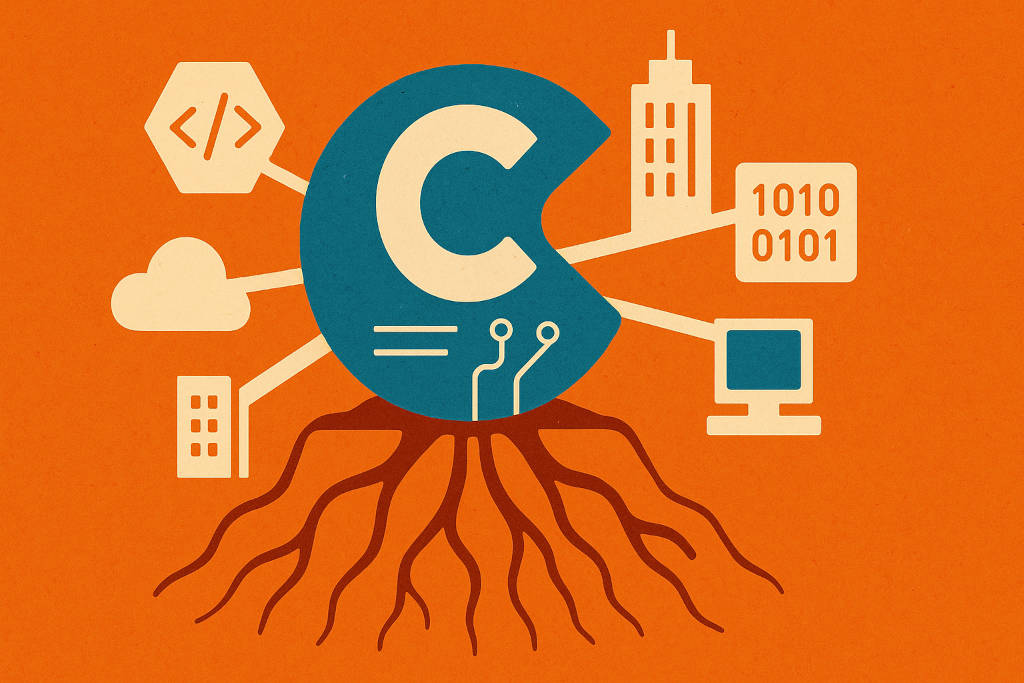
In the history of computer science, few families of programming languages have influenced software development as deeply as C, C++, and C#. Their story is the biography of a technological lineage—a family of languages that helped transform computers from specialized machines into the foundation of modern digital life.
Each member entered the world during a different era, carrying forward lessons from the previous generation.
C was the foundation builder, teaching computers how to work closely with hardware.
C++ became the bridge between efficiency and modern software design.
C# emerged as the enterprise engineer, creating powerful applications through the .NET ecosystem.
Together, they shaped the development of operating systems, games, embedded devices, enterprise platforms, cloud services, and secure applications.
Their shared mission was clear:
Create software that is efficient, functional, reliable, and capable of solving real-world problems.
Chapter One: C — The Foundation Architect
The first member of the family was C, created in the early 1970s by Dennis Ritchie at Bell Labs.
C was born during a time when programmers needed a language that could communicate efficiently with computer hardware while still providing higher-level programming features.
Before C, software development often required writing instructions in low-level assembly languages. C introduced a new balance: developers could write understandable code while maintaining close control over memory and system resources.
C became the language of foundations.
It helped create:
operating systems,
device drivers,
embedded systems,
databases,
networking software.
One of its greatest achievements was helping build the UNIX operating system, which influenced generations of computing platforms.
If programming languages were people, C would be the engineer who designed the foundation of the city before anyone built on top of it.
Chapter Two: C and the Art of Efficient Coding
C introduced important concepts that continue to influence modern software engineering:
direct memory management,
structured programming,
performance optimization,
portability across different systems.
These abilities allowed developers to create software that ran quickly and efficiently.
However, C also required careful attention. Because programmers had direct control over memory, mistakes could create problems such as:
memory leaks,
buffer overflows,
security vulnerabilities.
This taught an important lesson that continues today:
Powerful programming requires responsibility.
The relationship between efficiency and security became a central theme in software development.
Chapter Three: C++ — The Builder of Modern Software
As software systems became larger, developers needed ways to manage complexity.
In the 1980s, Bjarne Stroustrup developed C++, originally known as “C with Classes.”
C++ expanded the abilities of C by introducing object-oriented programming concepts.
It allowed developers to organize software into reusable components called objects.
C++ became known for combining:
the performance of C,
the organization of object-oriented design,
advanced programming techniques.
This made it valuable for building complex systems such as:
video games,
graphics engines,
financial software,
scientific applications,
browsers,
high-performance computing systems.
C++ became the architect of large software structures.
Where C built the foundation, C++ designed the buildings.
Chapter Four: The Connection to Functional and Useful Software
C and C++ helped establish many principles behind functional and useful software.
Good software must do more than run—it must solve problems effectively.
These languages encouraged developers to focus on:
Performance
Programs must use computing resources wisely.
C and C++ allow fine control over:
memory,
processing power,
hardware interaction.
This makes them valuable for applications where speed matters.
Reusability
C++ introduced object-oriented approaches that helped developers create reusable components.
Reusable code improves:
productivity,
consistency,
maintainability.
Reliability
Large software systems require predictable behavior.
Careful design of:
data structures,
algorithms,
memory management,
helps create dependable applications.
Chapter Five: C# — The Enterprise Engineer
At the beginning of the 21st century, another member of the family arrived: C#.
Created by Microsoft and led by Anders Hejlsberg, C# became one of the primary programming languages of the .NET platform.
C# inherited ideas from C and C++ but introduced a more managed and developer-friendly environment.
Unlike traditional C programming, where developers manually controlled memory, C# used the .NET runtime to manage many complex tasks automatically.
This allowed developers to focus more on application design and less on low-level system management.
C# became a major language for:
web applications,
enterprise software,
cloud services,
desktop applications,
mobile development,
game development.
If C was the foundation engineer and C++ was the architect, C# became the modern construction manager organizing large digital projects.
Chapter Six: The Web Programming Connection
As the internet evolved, these languages found important roles in web development.
C
C influenced web infrastructure through:
server software,
networking systems,
performance-critical services.
Many technologies that support the web depend on concepts originally developed with C.
C++
C++ became important for:
browser engines,
graphics processing,
high-performance web applications,
backend systems requiring speed.
C#
Through ASP.NET and the .NET ecosystem, C# became a major force in web programming.
Developers used C# to create:
websites,
APIs,
enterprise portals,
cloud applications,
online business systems.
C# connected powerful programming concepts with modern web development practices.
Chapter Seven: Security and the Responsibility of Code
Security became one of the most important chapters in the biography of these languages.
Software today protects:
financial information,
personal data,
business systems,
critical infrastructure.
C and C++ taught developers the importance of careful memory management and secure coding practices.
C# introduced managed environments that reduced certain categories of programming errors.
All three languages contributed to security through:
strong software architecture,
careful input handling,
authentication systems,
encryption libraries,
secure development practices.
The lesson was clear:
Reliable software is built by combining technical power with responsible engineering.
Chapter Eight: The Personalities of the Programming Family
If these languages were people, their biographies would describe a remarkable family.
C — The Foundation Builder
C would be the engineer who understands the machine itself.
It values:
efficiency,
control,
simplicity,
performance.
C++ — The Master Architect
C++ would be the designer of complex systems.
It values:
flexibility,
abstraction,
organization,
performance.
C# — The Modern Professional
C# would be the enterprise specialist.
It values:
productivity,
safety,
scalability,
developer experience.
Chapter Nine: A Legacy That Continues
The story of C, C++, and C# is the story of software evolution itself.
They represent different generations of programming philosophy:
C taught computers to be controlled efficiently.
C++ taught developers to manage complexity.
C# taught teams to build modern applications quickly and safely.
Their influence can be found everywhere—from operating systems and video games to websites, cloud platforms, and enterprise software.
Their greatest achievement is not a single application or invention. Their legacy is the millions of developers who use their ideas to create technology that is faster, more useful, and more secure.
The biography of C, C++, and C# is ultimately the story of humanity learning how to communicate with machines—and how to turn that communication into the digital world around us.

For decades, professional experience has been measured largely through employment. A person works for a company, nonprofit, agency, or client, receives compensation, and accumulates years that can later be listed on a résumé.
This model has obvious advantages. Employment provides structure, accountability, defined responsibilities, deadlines, colleagues, customers, and often a supervisor who can verify what someone did.
But there is another way people develop meaningful experience: through self-directed and self-organized initiatives.
People build businesses before they become profitable. They create software before anyone hires them. They conduct research independently.
They organize communities, develop products, create media, contribute to open-source projects, and collaborate with peers around problems they care about.
The difference is that traditional employment comes with an established system for recognizing the experience, while self-directed work often does not.
A platform that documents these initiatives from beginning to end could begin closing that gap.
Employment Provides Structure—But Not a Monopoly on Experience
Traditional employment offers a powerful learning environment.
An employee may be given responsibilities that require them to communicate with colleagues, solve problems under deadlines, work with customers, follow organizational processes, and deliver measurable results.
The organization also provides external validation. Someone hired as an engineer has, at minimum, been judged employable by an organization. A manager can potentially verify the employee's responsibilities and performance.
These are legitimate advantages.
However, employment itself does not guarantee meaningful development.
Someone can spend years performing repetitive tasks without substantially expanding their capabilities. Another employee may have a prestigious title but limited responsibility.
Therefore, time employed is an imperfect proxy for experience.
A two-year job and two years of meaningful problem-solving are not necessarily equivalent.
Self-Directed Work Offers Different Advantages
Self-directed initiatives operate differently.
Instead of being assigned a problem, an individual may identify one.
Instead of receiving a predetermined role, they may have to define their own responsibilities.
Instead of being given a team, they may need to recruit collaborators.
Instead of having a manager establish milestones, they must establish them themselves.
That creates a different kind of learning.
The individual develops not only technical or professional skills but also initiative, judgment, independence, resourcefulness, and ownership.
The challenge is verification.
A person can easily claim that they spent six months “building a startup.” Without evidence, an employer has little way to determine what actually happened.
This is where comprehensive documentation becomes important.
Documentation Changes the Equation
Imagine two candidates applying for the same position.
Candidate A has two years of employment at a company. Their résumé lists their position, responsibilities, and accomplishments.
Candidate B spent two years independently developing a product with a team of four. Their platform record shows the original problem, research, project timeline, individual contributions, prototypes, failed experiments, technical decisions, user feedback, iterations, and final outcome.
Candidate B doesn't merely say they gained experience.
The experience is observable.
This doesn't mean Candidate B should automatically be considered more qualified. Candidate A may have extensive experience that the platform doesn't capture in the same way.
The important point is that both candidates now have something that can be evaluated.
The comparison moves away from:
“Who had the traditional opportunity?”
and toward:
“What has this person actually demonstrated?”
Paid and Unpaid Experience Can Coexist
The goal should not be to replace employment with unpaid work.
That would create its own problems.
People need income, and organizations should not use “experience” as an excuse to obtain free labor indefinitely.
Instead, the objective should be to recognize that compensation and experience measure different things.
Compensation measures economic exchange.
Experience measures development, exposure, capability, responsibility, and learning.
The two frequently occur together, but they do not have to.
Someone can receive valuable experience while volunteering. Someone can develop extraordinary entrepreneurial skills before generating revenue.
Someone can learn leadership by organizing a community project.
Conversely, someone can be well compensated without developing every skill that a résumé might imply.
Traditional Work and Self-Directed Work Are Complementary
The strongest model isn't traditional employment versus independent initiatives.
It is both.
A person could have a professional history containing:
Employment + Freelancing + Entrepreneurship + Research + Community Projects + Independent Initiatives + Collaborative Projects
A comprehensive experience platform could document all of them using common principles.
What was the objective?
What responsibilities did the person have?
What did they produce?
What decisions did they make?
What challenges did they encounter?
What was the outcome?
Who can verify the work?
What competencies were demonstrated?
This creates a more complete picture of the person.
A New Definition of Qualification
The traditional model often asks:
“Where have you worked?”
A more capability-oriented model could ask:
“What have you done?”
Those questions are not identical.
The first is useful because organizations provide structure and accountability.
The second can reveal capabilities that employment history may overlook.
The future of experience recognition could therefore involve both.
A person might earn experience through a corporation, a nonprofit, a client, or their own initiative. What matters is not simply who issued the paycheck but whether the person can demonstrate meaningful work and development.
The Opportunity Ahead
The greatest advantage of a documented self-directed experience system is that it could expand the number of ways people can become qualified.
Instead of requiring every person to follow the same sequence—education, employment, promotion, experience—it could allow people to build credible experience through multiple pathways.
Employment would remain valuable.
Degrees would remain valuable.
Professional certifications would remain valuable.
But they would become different forms of evidence rather than the exclusive definition of experience.
That distinction matters.
The world has changed dramatically, yet the résumé still largely asks people to organize their lives around positions they were given.
A more modern system could allow people to organize their professional identity around what they have actually built, contributed, solved, learned, and demonstrated.
The ultimate comparison is therefore not between paid work and unpaid work.
It is between experience that can be verified and experience that cannot.
If someone can demonstrate the work, document the process, substantiate their contribution, and show what they accomplished, the absence of a paycheck should not automatically make that experience invisible.