
WHO DECIDES WHO SPEAKS FOR BLACK PEOPLE?
The Double Standard of Leadership, Representation, and the Expectation That Black People Must Have One Recognized Voice
Introduction: Why Must Black People Have One Leader?
There is an interesting expectation that seems to emerge whenever conversations turn to Black people, Black identity, political influence, cultural representation, or collective advancement.
Someone inevitably asks: Who is the leader of Black people?
Who speaks for the Black community?
Who represents Black interests?
Who is the face of Black America?
And perhaps the most revealing question is this: Who gets to decide?
It is an interesting expectation because society does not generally require every other ethnic, cultural, or racial population to identify one individual who speaks for everyone within that population.
There is no universally recognized spokesperson for all White people, all Europeans, all Asians, all Hispanics, all Arabs, or all Indigenous peoples.
These populations contain different nationalities, religions, political beliefs, languages, economic interests, and cultural traditions.
Their members can disagree, support different leaders, establish separate institutions, and pursue different objectives without necessarily being expected to select one individual to represent them all.
Yet Black people are frequently asked to identify a single leader, a singular spokesperson, or an officially recognizable face.
Why?
And why do some people, including some within the Black community, appear to believe that Black leadership must be validated, selected, or approved before it can be considered legitimate?
Perhaps this expectation reveals something deeper about how society has historically viewed Black people, their political independence, and their right to determine their own leadership.
1. The Expectation of a Singular Black Leader
Throughout American history, Black leadership has often been discussed through a small number of highly recognizable individuals.
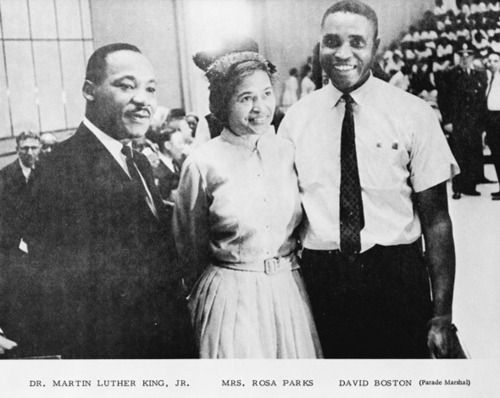
Names such as Frederick Douglass, Booker T. Washington, W.E.B. Du Bois, Marcus Garvey, Martin Luther King Jr., Malcolm X, and others have become central to discussions of Black political and cultural leadership.
Each represented different philosophies, strategies, and visions.
Some emphasized education and economic advancement. Others advocated political participation, civil rights, self-determination, international solidarity, or economic independence.
They did not always agree.
And that is precisely the point.
Black leadership has never been limited to one philosophy, one personality, or one organizational structure.
Yet popular historical narratives sometimes create the impression that each generation must produce one individual who becomes the recognized representative of Black people.
This expectation can become problematic when people begin treating the absence of a universally accepted leader as evidence that Black people lack direction.
A population does not need one leader to possess leadership.
It needs individuals who can lead in different capacities, within different institutions, and toward different objectives.
2. Do Other Ethnic Groups Have One Person Who Represents Them All?
Consider the diversity within other populations.
Who is the single leader of Europeans?
Would it be a British political leader, a French intellectual, a German religious figure, an Italian businessperson, or a Spanish cultural personality?
There is no reasonable way to select one person to represent all Europeans.
Who is the leader of Asian people?
Asia contains enormous linguistic, religious, national, and cultural diversity. Chinese, Japanese, Korean, Indian, Vietnamese, Filipino, and other communities have their own institutions, histories, political structures, and cultural leadership.
Who is the leader of Hispanic or Latino people?
The term encompasses populations with different national origins, racial backgrounds, languages, and historical experiences.
Who speaks for all Arabs?
The Arab world contains different countries, religious communities, political systems, and competing interests.
These populations are not generally expected to agree on one person who represents everyone.
They can have presidents, religious authorities, business leaders, scholars, activists, artists, and community organizers simultaneously.
Their leadership is often understood as situational and specialized.
Why, then, does the expectation of one recognizable leader so frequently enter discussions about Black people?
3. The Historical Roots of Outside Control Over Black Leadership
To understand this expectation, we must examine the history of how Black leadership developed in societies shaped by slavery, segregation, and colonialism.
During slavery, enslaved Africans were denied fundamental political and legal rights.
Enslavers and colonial authorities frequently attempted to control communication, movement, education, religious gatherings, and collective organization.
Independent leadership among enslaved populations could be viewed as a threat to the existing system.
After emancipation, Black communities developed churches, schools, businesses, mutual-aid societies, political organizations, and other institutions.
These organizations produced leaders from within the communities themselves.
However, during segregation and Jim Crow, access to political power and public institutions remained restricted.
In some circumstances, white political and business authorities attempted to determine which Black representatives would be recognized, consulted, or permitted to participate in negotiations.
The historical record includes instances in which outside institutions preferred certain representatives because they were considered more acceptable, accommodating, or politically convenient.
This history matters because it demonstrates that the question of who represents Black people has never been entirely separate from the question of who controls access to power.
When others determine which voices are acceptable, leadership can become a matter of external recognition rather than community legitimacy.
4. The Difference Between Recognizing a Leader and Selecting One
There is an important distinction between recognizing someone's leadership and assuming the authority to select that person as a representative of an entire population.
A leader may emerge because people trust that individual.
A community organizer may earn respect through years of service.
A religious leader may have influence because of spiritual responsibilities.
An elected official may receive authority through an electoral process.
An intellectual may influence public thought through research, scholarship, and writing.
These are different forms of leadership.
But none automatically grants an individual the authority to speak for every Black person.
The problem arises when influential institutions, media organizations, political groups, or outside commentators attempt to determine which Black individual should become the recognized face of Black people.
This can create an artificial hierarchy in which some voices receive national attention while others remain overlooked.
It can also suggest that Black leadership requires a form of external approval that is not consistently demanded of other populations.
A person does not need to be selected by an outside institution to be a legitimate leader within their own community.
5. The Media's Role in Creating the Face of Black America
Media institutions play an important role in determining which individuals become widely recognized.
Television networks, newspapers, publishing companies, entertainment platforms, universities, and political organizations influence which voices receive visibility.
Over time, a relatively small number of individuals may become associated with the broader Black experience.
This can create the impression that those individuals represent the opinions and interests of millions of people.
But visibility is not the same as representation.
A person who receives substantial media attention may be influential without having the authority to speak for an entire population.
Likewise, someone with significant community support may receive little national attention.
The distinction is important.
When media outlets repeatedly present a particular person as the voice of Black America, audiences may begin to assume that this individual represents a collective position.
Yet Black Americans have different political beliefs, religious traditions, economic circumstances, cultural identities, and opinions about the future.
There is no single position that automatically represents all of them.
6. Why Do Some Black People Also Believe There Must Be One Recognized Leader?
This part of the discussion deserves particular attention because the expectation is not exclusively imposed from outside.
Some Black people also express the belief that the community needs one central leader.
There are understandable reasons for this.
The desire for unity: After generations of racial discrimination, many people understandably want to see a unified voice capable of addressing shared challenges.
The historical legacy of civil rights leadership: The visibility of prominent civil rights figures has created an association between social progress and recognizable individual leadership.
The desire for political influence: Some believe that a single representative would make it easier to negotiate with governments, institutions, and political organizations.
The search for direction: When communities experience economic inequality, educational disparities, political disagreement, and social challenges, the idea of one influential leader can appear attractive.
However, unity does not necessarily require uniformity.
Black people can share certain historical experiences and concerns without agreeing on every political, religious, economic, or cultural issue.
A demand for one leader can unintentionally create another problem: disagreement becomes interpreted as disloyalty.
Someone who questions a prominent Black figure may be accused of undermining the community.
Someone who supports a different philosophy may be viewed as divisive.
But healthy leadership requires the freedom to question, debate, disagree, and offer alternatives.
A community that cannot disagree openly risks confusing loyalty to an individual with commitment to the broader population.
7. The Problem With Allowing Others to Determine Who Is Acceptable
Perhaps the most important issue is the difference between community leadership and leadership approved by outside interests.
History provides examples of political and institutional systems that preferred certain representatives because those individuals were perceived as easier to negotiate with or more aligned with established interests.
This does not mean every prominent Black leader is selected by outside forces or that institutional recognition is automatically illegitimate.
Many influential Black leaders earned their positions through extraordinary personal sacrifice, organizing, scholarship, public service, and community support.
The concern is broader.
When outside approval becomes the standard by which Black leadership is judged, the community risks surrendering part of its ability to define its own priorities.
Black leadership should not be determined by popularity alone, media exposure, political convenience, celebrity status, or institutional endorsement.
It should be evaluated through character, competence, accountability, knowledge, service, and the willingness to address the needs of the people being served.
And those standards should be established through meaningful participation by the communities involved.
8. Black Leadership Does Not Have to Be Centralized to Be Effective
One of the strongest arguments against the expectation of a singular Black leader is that Black communities have historically advanced through multiple forms of leadership.
Consider the range of people who contribute to community development:
• Educators who prepare future generations.
• Business owners who create employment and economic opportunities.
• Religious leaders who provide spiritual guidance and community support.
• Historians who preserve cultural knowledge.
• Scientists and professionals who advance research and innovation.
• Attorneys who defend civil and legal rights.
• Community organizers who address local problems.
• Artists and writers who influence culture and public understanding.
• Elected officials who represent their constituents.
• Parents and elders who preserve family traditions and values.
None of these individuals needs to become the face of all Black people.
Their contributions can be significant within their respective areas of responsibility.
In fact, a community with strong institutions and multiple accountable leaders may be better equipped to address different challenges than one that depends heavily on a single personality.
Leadership can be distributed without becoming meaningless.
9. The Right to Choose Our Own Direction
There is a fundamental difference between being represented and being spoken for.
Representation should involve accountability to the people being represented.
It should involve listening, consultation, transparency, and an understanding of the interests of those affected.
Being spoken for can mean that someone assumes the authority to define the needs, beliefs, and priorities of others without their consent.
Black people, like every other population, should have the freedom to determine which individuals they trust to represent them in particular circumstances.
An elected official may represent a district.
A civil rights organization may represent its membership.
A religious leader may represent a congregation.
A business association may represent its members.
A national organization may advocate for a particular set of interests.
But none should automatically be assumed to represent every Black person.
There is no requirement that every Black individual recognize the same leader, follow the same philosophy, or subscribe to the same political vision.
The ability to choose different leaders is not evidence of weakness.
It is an expression of individual and collective freedom.
10. Conclusion: Who Gave Anyone the Authority to Choose the Face of Black People?
Perhaps the most revealing aspect of the expectation that Black people must have one recognized leader is the assumption that such a person can be identified and accepted by everyone.
That expectation does not adequately account for the diversity of Black communities throughout the world.
Black people are not one political organization, one religious institution, one nationality, or one unified voting bloc.
They are millions of individuals with different experiences, priorities, beliefs, and ambitions.
They can have multiple leaders without needing one person to speak for everyone.
They can disagree without being divided.
They can organize around different causes without abandoning their shared history.
And they can recognize leadership without surrendering their right to evaluate it.
The historical experience of slavery, segregation, colonialism, and racial discrimination makes the question of who controls Black representation particularly important.
It is worth asking why outside institutions sometimes appear to expect Black people to identify a singular representative when comparable expectations are not consistently placed on other diverse populations.
It is equally important for Black communities to examine why they sometimes reproduce that expectation themselves.
The answer should not be another attempt to identify the one acceptable face of Black leadership.
It should be a recognition that leadership is not a title that one person must possess on behalf of millions.
It is a responsibility that can be exercised by many people in different ways.
Black people do not need someone else's permission to lead, nor do they need to agree on one person to demonstrate that they possess direction, identity, or collective strength.
The right to determine who represents a community belongs first and foremost to the people who make up that community.
A FINAL THOUGHT
If no single individual is expected to represent every European, Asian, Arab, Hispanic, or Indigenous person, why should Black people be expected to identify one person who represents them all?
Perhaps the better question is not who should become the face of Black people.
Perhaps it is why anyone assumes there must be one.
A people do not lose their identity because they have many voices. They lose the freedom to define themselves when someone else insists on choosing which voice they are allowed to hear.
 201043