The Battle of Moclín (1280): The Granadan Victory That Shook the Kingdom of Castile
The Battle of Moclín, fought on June 23, 1280, was an important military confrontation between the Kingdom of Granada and the forces of the Crown of Castile during the medieval struggle for control of the Iberian Peninsula. Also known as the Disaster of Moclín, the encounter resulted in a major Granadan victory and inflicted devastating losses on the Castilian military forces, particularly the powerful Order of Santiago.
The battle took place near the fortress of Moclín, in present-day Granada, Spain, during the reign of Muhammad II of Granada and Alfonso X of Castile. It formed part of the continuing military and political rivalry between Christian-ruled kingdoms and Muslim-ruled territories in medieval Iberia.
What made the battle particularly significant was the effectiveness of the Granadan military strategy. Rather than confronting the larger Castilian force in a straightforward engagement, the Granadan army used deception and an ambush to exploit the movements of its opponents.
The defeat weakened an important Christian military order, demonstrated the continuing military strength of the Nasrid Kingdom of Granada, and became a memorable episode in the history of medieval warfare in Spain.
1. Historical Background: The Political Situation in Iberia
To understand the significance of the Battle of Moclín, it is necessary to examine the political and military situation of the Iberian Peninsula during the thirteenth century.
At this time, the peninsula was divided among several Christian kingdoms and Muslim territories. The Crown of Castile controlled extensive territories, while the Kingdom of Granada, ruled by the Nasrid dynasty, remained an important Muslim political power in southern Iberia.
The Kingdom of Granada had been established in 1238 under Muhammad I ibn al-Ahmar. Its rulers developed a sophisticated political administration, maintained diplomatic relationships with neighboring powers, and established Granada as an important center of commerce, architecture, scholarship, and Islamic culture.
During the reign of Muhammad II (1273–1302), Granada faced considerable pressure from Castile and other regional powers. Nevertheless, the Nasrid rulers maintained their independence through military resistance, diplomacy, and strategic alliances.
The Castilian monarch, Alfonso X, sought to expand his influence and weaken Granada's political and military position.
These competing interests created an environment of continuing warfare, border raids, diplomatic negotiations, and shifting alliances.
The Battle of Moclín emerged from this wider struggle for territorial control and political supremacy.
2. The Main Historical Figures
Three important figures are associated with the events surrounding the battle.
Muhammad II of Granada
Muhammad II was the ruler of the Nasrid Kingdom of Granada from 1273 until 1302.
He was an experienced political and military leader who worked to preserve the independence of his kingdom against Christian expansion.
His reign involved military campaigns, diplomatic negotiations, and efforts to strengthen the political organization of Granada.
During the Battle of Moclín, the Granadan forces fought under his authority and successfully defended their territory against the Castilian expedition.
Alfonso X of Castile
Alfonso X, commonly known as Alfonso the Wise, was King of Castile and León from 1252 to 1284.
He was recognized for his contributions to law, literature, astronomy, and administration. However, his reign also involved military conflicts and political difficulties.
In 1280, Alfonso X organized military preparations against Granada. Although he intended to participate in the campaign, illness prevented him from personally leading the expedition.
His son, Infante Sancho, took a leading role in the military operations.
Gonzalo Ruiz Girón
Gonzalo Ruiz Girón was the Grand Master of the Order of Santiago, one of the most important military-religious organizations in medieval Castile.
The Order of Santiago played a significant role in the military campaigns against Muslim territories in the Iberian Peninsula.
Girón commanded an important contingent of Castilian troops during the expedition of 1280.
His decision to pursue a smaller Granadan force near Moclín ultimately exposed his soldiers to a devastating ambush. He was seriously wounded during the encounter and died shortly afterward.
His death represented a significant loss for the Order of Santiago.
3. Causes of the Battle of Moclín
The battle did not occur as an isolated military incident. It was part of a broader Castilian campaign intended to weaken the Kingdom of Granada.
In 1280, Alfonso X organized an expedition into Granadan territory. His objective was to damage the agricultural resources of the region, weaken the economic foundations of Granada, and exert military pressure on Muhammad II.
The campaign involved the collection and movement of substantial military forces.
Infante Sancho assembled troops at Alcalá de Benzaide, generally identified with present-day Alcalá la Real, while other forces joined the expedition.
An important element of the campaign was the involvement of the Ban? Ashq?l?l?, a powerful faction that opposed the Nasrid rulers of Granada. Their political rivalry with the ruling dynasty created opportunities for Castilian intervention in Granadan affairs.
The Castilian expedition therefore involved more than a straightforward territorial invasion. It was connected to internal political divisions within Granada.
Several factors contributed to the confrontation:
• Territorial Ambitions: Castile sought to weaken Granada and expand its influence in southern Iberia.
• Political Rivalry: Muhammad II faced opposition from the Ban? Ashq?l?l?, who had their own interests in the region.
• Economic Warfare: The Castilian campaign sought to destroy agricultural resources and disrupt the economic stability of Granada.
• Military Competition: Both kingdoms sought to maintain control over strategic fortresses, roads, and frontier territories.
These circumstances created the conditions for the military encounter near Moclín.
4. The Battle of June 23, 1280
The Battle of Moclín took place on June 23, 1280, according to the commonly accepted chronology, although some historical accounts give a slightly different date.
The Castilian forces were operating in the countryside around Granada when they approached the strategically important fortress of Moclín.
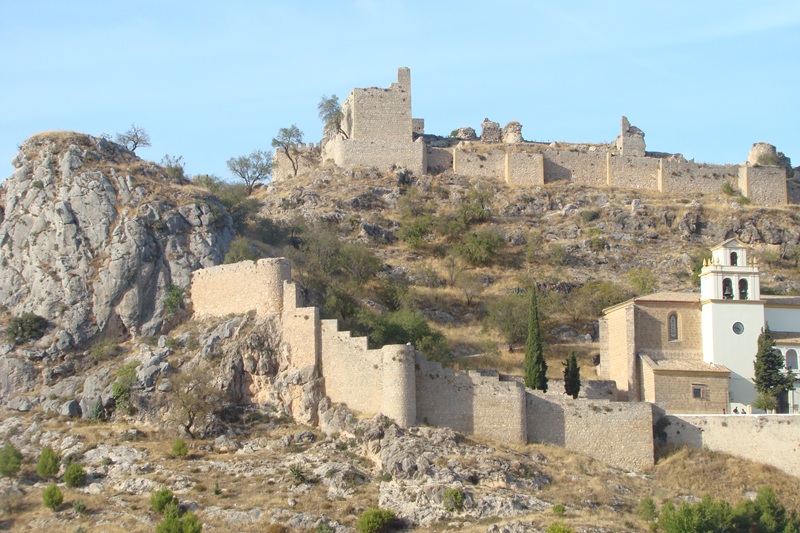
The location was particularly significant because the fortress occupied an elevated position overlooking surrounding valleys and routes connecting different parts of the frontier.
The Granadan Military Strategy
According to accounts of the battle, the Granadan army employed a deceptive military maneuver.
A relatively small group of Muslim cavalry appeared before the advancing Castilian soldiers. Rather than immediately engaging the larger force, the Granadan troops appeared to retreat.
Gonzalo Ruiz Girón, believing that the enemy was withdrawing, pursued the cavalry with a relatively small contingent.
However, the apparent retreat was a deliberate maneuver.
The pursuing Castilian soldiers were drawn toward an area where a much larger Granadan force was waiting in ambush.
Historical accounts describe an ambush involving approximately 2,000 Granadan cavalrymen. Once the Castilian contingent entered the trap, the Muslim troops attacked and inflicted severe casualties.
The Castilian soldiers were caught in a dangerous position, making an organized withdrawal extremely difficult.
The Defeat of the Castilian Forces
The Granadan attack resulted in a major military disaster for the Castilian expedition.
The Order of Santiago suffered particularly heavy casualties. Many of its knights and military members were killed during the fighting.
Gonzalo Ruiz Girón sustained serious wounds and died several days later.
Contemporary and later chronicles report approximately 2,800 Christian casualties, although medieval casualty figures should be treated cautiously because precise military records are unavailable.
The defeat became known as the Desastre de Moclín, or Disaster of Moclín.
It demonstrated how an effective ambush could defeat a larger military force through deception, coordination, and knowledge of the terrain.
5. The Role of the Order of Santiago
One of the most important consequences of the Battle of Moclín was the damage inflicted on the Order of Santiago.
Founded in the twelfth century, the Order of Santiago was a religious and military institution whose members combined religious commitments with military service.
The organization played a central role in the Christian military campaigns in the Iberian Peninsula.
Its responsibilities included:
• Defending Christian frontier territories.
• Participating in military expeditions.
• Protecting strategic fortifications and settlements.
• Supporting the expansion of Castilian political authority.
• Maintaining military forces under the leadership of its Grand Master.
The Battle of Moclín dealt a serious blow to the organization.
The death of Gonzalo Ruiz Girón and the loss of many experienced knights weakened its military leadership and fighting capacity.
The scale of the casualties also demonstrated the vulnerability of military-religious orders when operating in unfamiliar or dangerous terrain without adequate reconnaissance.
Nevertheless, the Order of Santiago survived and continued to play an important role in subsequent military campaigns.
6. Why Did the Granadan Army Win?
The victory at Moclín can be understood through several military factors.
A. Effective Use of Deception
The Granadan troops used an apparent retreat to encourage the Castilian soldiers to pursue them.
This tactic separated part of the Castilian force from its main body and exposed it to an ambush.
B. Knowledge of the Terrain
The Granadan defenders operated in territory they understood well.
Their familiarity with the surrounding landscape provided an advantage when positioning their forces and selecting the location of the attack.
C. Military Coordination
The ambush required coordination between the smaller cavalry group and the larger force waiting nearby.
The success of the operation suggests that the Granadan commanders were able to coordinate their forces effectively.
D. Castilian Tactical Miscalculation
The decision by Gonzalo Ruiz Girón to pursue the apparently retreating enemy with a limited contingent exposed his soldiers to considerable danger.
The Castilian troops were unable to respond effectively once the larger Granadan force revealed itself.
The outcome illustrates an important principle of medieval military history: numerical superiority does not automatically guarantee victory.
7. The Immediate Consequences of the Battle
The immediate consequences of the Battle of Moclín were serious for the Castilian expedition.
The loss of experienced soldiers and the death of the Grand Master of Santiago disrupted the military organization of the campaign.
When Infante Sancho received news of the defeat, he took measures to prevent the remaining forces from collapsing into disorder.
Importantly, Sancho had not personally participated in the ambush. He had remained at Alcalá de Benzaide with other troops.
After reorganizing his forces, he continued military operations in Granadan territory before eventually returning toward Córdoba.
Consequently, the Battle of Moclín did not end all Castilian military activity against Granada. Rather, it represented a major setback within a continuing campaign of warfare and territorial pressure.
The Granadan victory nevertheless demonstrated that Muhammad II's kingdom could successfully resist a major Castilian expedition.
8. The Historical Significance of the Battle of Moclín
The Battle of Moclín holds an important place in the military and political history of medieval Iberia.
Its significance extends beyond the immediate defeat of the Castilian forces.
A. Demonstration of Granadan Military Strength
The victory demonstrated that the Nasrid Kingdom of Granada possessed the military organization and strategic ability to defend its territory against a powerful Christian kingdom.
Granada was not simply a declining Muslim territory awaiting conquest. It remained an independent political power capable of resisting external military pressure.
B. Strengthening of Nasrid Political Authority
The victory reinforced the position of Muhammad II and demonstrated the ability of his government to protect the kingdom.
It also helped illustrate the importance of military success in maintaining political legitimacy during a period of dynastic competition and regional instability.
C. Weakening of an Important Christian Military Organization
The casualties suffered by the Order of Santiago represented a significant loss for Castile.
The death of its Grand Master and many experienced members disrupted its military capabilities and leadership.
D. Importance of Military Intelligence and Strategy
The battle became an example of the effectiveness of ambush tactics in medieval warfare.
It demonstrated that deception, terrain, and coordination could overcome numerical advantages.
E. Preservation of Granada's Independence
Although the victory did not permanently end Castilian ambitions against Granada, it formed part of the broader history of Nasrid resistance that allowed the kingdom to survive for approximately two additional centuries.
Granada would eventually fall to the Catholic Monarchs, Ferdinand II of Aragon and Isabella I of Castile, in 1492.
9. Moclín and the Wider History of the Reconquista
The Battle of Moclín must also be understood within the wider historical process known as the Reconquista.
The Reconquista refers to the centuries-long expansion of Christian-ruled kingdoms into territories previously controlled by Muslim rulers in the Iberian Peninsula.
This process was not a continuous sequence of Christian victories. It involved periods of military expansion, political negotiation, alliances, territorial reversals, and coexistence.
The Battle of Moclín illustrates this complexity.
Despite the expansion of Castilian power during the thirteenth century, the Kingdom of Granada remained an important independent state.
Its survival was supported by several factors:
• Effective military leadership.
• Strategic use of mountainous terrain and fortified settlements.
• Diplomatic relationships with neighboring powers.
• Commercial prosperity and agricultural production.
• Political adaptability in response to changing regional circumstances.
The battle therefore provides an important reminder that the history of medieval Iberia involved competing political powers rather than a simple story of uninterrupted conquest.
10. The Historical Legacy of Moclín
Today, Moclín is a municipality in the province of Granada, Andalusia, Spain.
Its medieval fortress remains an important historical landmark and provides evidence of the strategic importance of the settlement during the period of conflict between Castile and Granada.
For centuries, Moclín occupied an important position along the frontier between the Nasrid Kingdom of Granada and the territories controlled by the Crown of Castile.
Its geographical location made it valuable for military surveillance, territorial defense, and control of movement across the surrounding countryside.
The Battle of 1280 contributed to the historical identity of the settlement.
The name Disaster of Moclín remains associated with the defeat of the Castilian forces and the destruction of much of the military contingent accompanying Gonzalo Ruiz Girón.
The battle is also significant because it illustrates the importance of local fortresses and frontier communities in shaping the political history of medieval Spain.
11. Chronology of Important Events
Date Event
1238 Muhammad I establishes the Nasrid Kingdom of Granada.
1252 Alfonso X becomes King of Castile and León.
1273 Muhammad II succeeds to the Granadan throne.
Early 1280 Alfonso X organizes preparations for a military campaign against Granada.
June 1280 Infante Sancho assembles Castilian forces for the expedition.
June 23, 1280 The Battle of Moclín takes place; Granadan forces defeat the Castilian contingent.
Shortly afterward Gonzalo Ruiz Girón dies from wounds sustained during the battle.
1302 Muhammad II's reign ends.
1492 The Kingdom of Granada falls to the Catholic Monarchs.
Conclusion
The Battle of Moclín of June 23, 1280, was a significant event in the medieval history of the Iberian Peninsula. The victory of the Granadan forces under the authority of Muhammad II demonstrated the continuing military strength, political resilience, and strategic capabilities of the Nasrid Kingdom.
The defeat of the Castilian contingent, particularly the devastating losses suffered by the Order of Santiago, represented a major setback for Alfonso X's military ambitions in southern Iberia.
The battle also provides valuable insight into medieval military strategy. The use of deception, a carefully prepared ambush, and familiarity with the surrounding terrain enabled the Granadan forces to defeat a larger opponent.
Beyond its immediate military consequences, Moclín illustrates the complicated relationship between Christian and Muslim political powers during the Reconquista. Warfare, diplomacy, political alliances, and economic competition all contributed to the changing balance of power in medieval Spain.
Ultimately, the Battle of Moclín remains an important historical example of how military strategy and regional resistance influenced the survival of the Kingdom of Granada. Its legacy reminds us that the medieval history of Spain was shaped not only by major conquests but also by the numerous battles and political struggles that determined the fate of kingdoms and civilizations.
 102947