Roofing Types and Materials: A Guide to Choosing the Right Roof
A roof is one of the most important components of a building. It protects the structure from rain, wind, sunlight, heat, cold, and debris while also contributing to energy efficiency, appearance, and long-term property value..
But choosing a roof involves much more than selecting a color..
There are many different roof designs and roofing materials, each with different advantages, disadvantages, costs, maintenance requirements, and expected lifespans..
There is also no single roofing material that is universally "the best." The appropriate choice depends on the climate, roof design, budget, building structure, expected lifespan, maintenance preferences, and local building requirements..
This article examines the most common roof types and materials and explains where each tends to work best..
Major Types of Roof Designs.
Before choosing a roofing material, it is useful to understand the roof's shape..
Gable Roof.
A gable roof has two sloping sections that meet at a ridge..
It is one of the most recognizable residential roof designs..
Advantages.
• Relatively straightforward construction.
• Good drainage.
• Can provide attic space.
• Works with many roofing materials.
• Can provide effective ventilation.
Disadvantages.
Large gable ends can be exposed to strong winds..
In hurricane-prone areas, roof geometry and structural connections become particularly important..
A gable roof can be an excellent design, but it must be properly engineered and constructed for the local climate..
Hip Roof.
A hip roof slopes downward on multiple sides of the building..
Hip roofs are common in areas exposed to hurricanes and severe storms because their geometry can provide good wind performance when properly engineered..
Advantages.
• Good wind resistance when properly constructed.
• No large vertical gable ends.
• Good drainage.
• Attractive appearance.
• Suitable for many architectural styles.
Disadvantages.
• More complex construction.
• Usually requires more roofing material.
• Can be more expensive than a simple gable roof.
• Less attic space in some designs.
Mansard Roof.
A mansard roof has two slopes on each side, with the lower slope being considerably steeper..
It can create substantial usable space beneath the roof..
Advantages.
• Increased upper-floor space.
• Distinctive architectural appearance.
• Can accommodate dormers.
Disadvantages.
• More complicated construction.
• More expensive.
• More potential areas for water infiltration.
• The relatively low upper slope can require careful material selection.
Gambrel Roof.
A gambrel roof resembles the roof commonly associated with barns..
It has two slopes on each side, producing a large interior volume..
Advantages.
• Excellent attic space.
• Distinctive appearance.
• Efficient use of the upper portion of the building.
Disadvantages.
• More vulnerable to certain wind conditions if improperly engineered.
• More complex than a simple gable.
• Additional roof joints can require careful detailing.
Flat Roof.
A flat roof is not necessarily perfectly horizontal. It usually incorporates a small slope for drainage..
Flat roofs are common on commercial buildings and modern residential architecture..
Advantages.
• Clean architectural appearance.
• Efficient use of building volume.
• Suitable for rooftop equipment.
• Can provide usable rooftop areas where permitted.
Disadvantages.
• Drainage must be carefully designed.
• Standing water can become a problem.
• Waterproofing is particularly important.
• Maintenance requirements can be higher.
Shed or Skillion Roof.
A shed roof consists primarily of a single sloping plane..
It is common in modern architecture, additions, garages, and smaller structures..
Its simplicity can make it relatively economical, although drainage and wind exposure must be considered..
Major Roofing Materials.
Once the roof design has been selected, the next decision is the material..
Asphalt Shingles.
Asphalt shingles are among the most common residential roofing products in North America..
They generally consist of a fiberglass reinforcement layer coated with asphalt and mineral granules..
There are several grades and styles..
Three-Tab Shingles.
Three-tab shingles are relatively simple and economical..
Their useful life can be shorter than that of higher-end architectural products..
Architectural Shingles.
Architectural or dimensional shingles are thicker and have a more textured appearance..
They generally offer improved durability and aesthetics compared with basic three-tab shingles..
Advantages of Asphalt Shingles.
• Relatively affordable.
• Widely available.
• Easy to repair.
• Large selection of colors and styles.
• Many qualified installers.
• Suitable for many residential applications.
Disadvantages.
• Generally shorter lifespan than premium roofing materials.
• Can deteriorate under intense UV exposure.
• Can lose granules over time.
• Vulnerable to severe weather depending on product and installation.
For homeowners seeking a balance between initial cost and performance, architectural asphalt shingles are often a practical choice..
Metal Roofing.
Metal roofing has become increasingly popular for both residential and commercial applications..
Common materials include:.
• Steel.
• Aluminum.
• Zinc.
• Copper.
Metal roofs can be manufactured as standing-seam panels or as panels designed to resemble shingles, slate, or tile..
Advantages.
• Long potential lifespan.
• Excellent resistance to many weather conditions.
• Lightweight compared with some masonry-based roofing materials.
• Highly resistant to fire.
• Low maintenance.
• Can be energy efficient.
• Available in many styles.
Disadvantages.
• Higher initial cost than basic asphalt shingles.
• Installation quality is extremely important.
• Can be noisy during heavy rain if poorly insulated.
• Some finishes can fade or weather over time.
• Repairs may require specialized contractors.
Standing-Seam Metal.
Standing-seam systems use concealed or specially designed fasteners and raised seams..
They are particularly popular for modern homes and commercial buildings..
A properly installed standing-seam metal roof can provide a very long service life..
Clay and Concrete Tile.
Tile roofing is especially common in warmer climates and Mediterranean, Spanish, Southwestern, and coastal architecture..
Clay Tile.
Clay tile can last for decades and, under suitable conditions, potentially much longer..
Concrete Tile.
Concrete tile can provide many of the aesthetic characteristics of clay tile while often costing less..
Advantages.
• Long service life.
• Excellent fire resistance.
• Attractive appearance.
• Good resistance to sunlight.
• Available in many styles.
• Can provide thermal benefits.
Disadvantages.
• Heavy.
• May require structural reinforcement.
• More expensive than asphalt shingles.
• Individual tiles can break.
• Installation requires specialized knowledge.
Tile is particularly attractive when long-term durability and architectural appearance are priorities..
Slate Roofing.
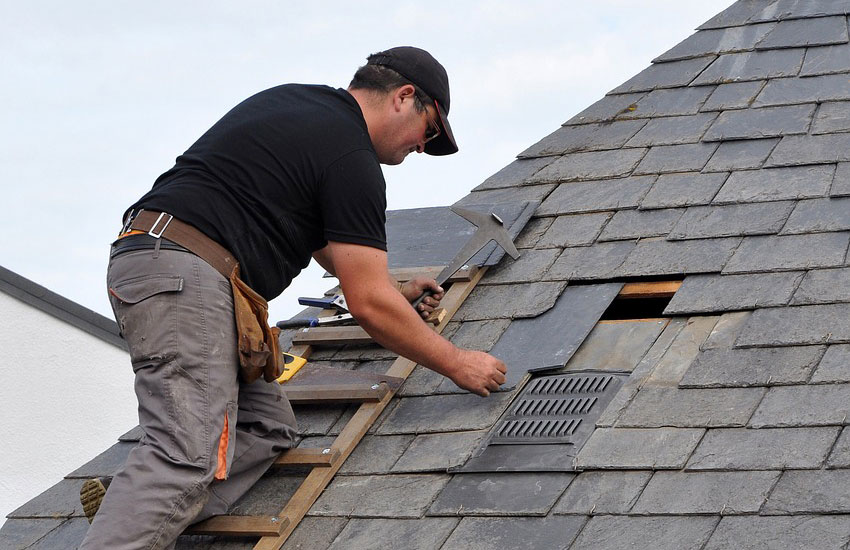
Natural slate is one of the longest-lasting roofing materials available..
A properly installed slate roof can potentially last many decades and, in some cases, well over a century..
Advantages.
• Extremely long lifespan.
• Natural appearance.
• Excellent fire resistance.
• Low water absorption.
• Highly durable.
Disadvantages.
• Very expensive.
• Extremely heavy.
• Requires specialized structural considerations.
• Requires experienced installers.
• Difficult to repair or replace individual pieces without appropriate expertise.
Slate is often considered a premium roofing material for homeowners prioritizing longevity over initial cost..
Synthetic Slate.
Synthetic slate products attempt to reproduce the appearance of natural slate using engineered materials..
Advantages.
• Lighter than natural slate.
• Usually less expensive.
• Easier installation.
• Consistent appearance.
• Can provide good durability.
Disadvantages.
• Product quality varies.
• Lifespan depends on the manufacturer and formulation.
• Does not necessarily have the same longevity as natural slate.
Synthetic slate can be an interesting compromise for homeowners who want the appearance of slate without its weight and expense..
Wood Shingles and Shakes.
Wood roofing has been used for centuries..
Common materials include cedar and other naturally durable woods..
Shingles.
Wood shingles are generally machine-cut and relatively uniform..
Shakes.
Wood shakes are typically thicker and have a more rustic appearance..
Advantages.
• Natural appearance.
• Excellent architectural character.
• Can age attractively.
• Renewable material when responsibly sourced.
Disadvantages.
• Maintenance requirements.
• Vulnerability to moisture and decay.
• Fire considerations.
• Potential insect damage.
• Usually more expensive than basic asphalt shingles.
Wood roofing can be beautiful but may require considerably more maintenance than modern manufactured materials..
Green Roofs.
A green roof incorporates vegetation and a growing medium over a waterproofing system..
There are two broad categories..
Extensive Green Roofs.
These generally use relatively shallow growing media and low-maintenance vegetation..
Intensive Green Roofs.
These use deeper growing media and can support a wider variety of plants..
Green roofs can:.
• Reduce stormwater runoff.
• Provide insulation.
• Reduce roof temperatures.
• Create habitat.
• Improve the appearance of buildings.
However, they require specialized structural and waterproofing systems..
They are not simply a layer of soil placed on top of a conventional roof..
Solar Roofing.
Solar technology can be incorporated into roofs in several ways..
Traditional solar panels can be mounted above conventional roofing..
Solar shingles and integrated photovoltaic roofing systems can incorporate electricity generation directly into the roof surface..
Advantages.
• Generates electricity.
• Can reduce grid electricity consumption.
• Can integrate with modern roofing designs.
• May provide long-term energy savings.
Disadvantages.
• Higher initial cost.
• Electrical equipment adds complexity.
• Repairs may require coordination between roofing and solar contractors.
• Roof orientation and shading affect energy production.
For homeowners considering solar, it can be worthwhile to evaluate the roof and solar system together rather than treating them as completely separate projects..
Which Roofing Material Is Best?.
There isn't one universal winner..
Instead, the "best" material depends on what matters most..
Priority Materials Worth Considering.
Lowest initial cost Asphalt shingles.
Long service life Slate, metal, tile.
Hurricane/severe-weather considerations Properly engineered metal, tile, asphalt, or other code-compliant systems.
Fire resistance Metal, slate, clay/concrete tile.
Lightweight construction Asphalt, some metal, synthetic materials.
Traditional appearance Wood, slate, clay tile.
Low maintenance Metal, slate, tile.
Energy-conscious design Metal with appropriate coatings, tile, or well-designed roofing assemblies.
Premium appearance Slate, copper, clay tile.
Modern architecture Standing-seam metal, membrane roofing, solar-integrated systems.
Budget-conscious replacement Architectural asphalt shingles.
The table should not be interpreted as saying that one material is automatically appropriate for every building. Installation quality, roof design, climate, and structural requirements can be just as important as the material itself..
Climate Should Influence the Decision.
A roofing material that performs well in one climate may not be ideal in another..
Hot and Sunny Climates.
Important considerations include:.
• UV resistance.
• Solar reflectance.
• Ventilation.
• Thermal performance.
• Material expansion and contraction.
Metal, tile, and appropriately selected asphalt systems can all work well when properly designed..
Cold and Snowy Climates.
Important considerations include:.
• Snow loads.
• Ice dams.
• Waterproofing.
• Insulation.
• Ventilation.
Roof geometry becomes particularly important..
Coastal and Hurricane-Prone Areas.
This deserves special attention..
Roofing material alone does not determine hurricane performance..
The entire roof system matters, including:.
• Roof shape.
• Sheathing.
• Fasteners.
• Underlayment.
• Edge details.
• Flashing.
• Roof-to-wall connections.
• Installation quality.
A premium roofing material installed poorly can perform worse than a less expensive system installed correctly..
Areas With Wildfire Risk.
Fire resistance can become a major consideration..
Metal, slate, and clay/concrete tile generally offer strong fire resistance, while wood roofing requires additional consideration and may be restricted in some areas..
Local building and wildfire codes should be consulted before selecting a material..
The Importance of the Underlayment.
People often focus on the visible roofing material while overlooking the layers underneath..
A roof system may include:.
• Roof decking.
• Underlayment.
• Ice and water protection where appropriate.
• Flashing.
• Ventilation.
• Roofing material.
• Gutters and drainage components.
The underlayment can provide an important secondary layer of protection against water intrusion..
In severe weather, the underlayment and flashing details can become particularly important..
Flashing Is One of the Most Important Components.
Many roof leaks do not occur because the primary roofing material suddenly becomes waterproof or non-waterproof..
They occur around penetrations and transitions..
Common vulnerable areas include:.
• Chimneys.
• Skylights.
• Plumbing vents.
• Valleys.
• Roof-to-wall intersections.
• Dormers.
• HVAC equipment.
• Roof edges.
Proper flashing is therefore critical..
A high-quality roofing material cannot compensate for poor flashing..
Installation May Matter More Than the Material.
One of the most important lessons for homeowners is that a roofing material is only as good as the system and installation supporting it..
A premium roof can fail prematurely because of:.
• Improper fastening.
• Poor ventilation.
• Inadequate flashing.
• Incorrect underlayment.
• Poor drainage.
• Improper installation around penetrations.
• Failure to account for local wind conditions.
When comparing contractors, homeowners should therefore look beyond the material brand..
Ask about:.
• Installation experience.
• Manufacturer requirements.
• Licensing where applicable.
• Insurance.
• Warranties.
• References.
• Ventilation.
• Flashing.
• Underlayment.
• Fastening methods.
Don't Choose Based Solely on Warranty Length.
Roofing warranties can be complicated..
A manufacturer's product warranty may cover material defects, while a contractor's workmanship warranty covers installation..
These are not necessarily the same thing..
A "lifetime" roofing warranty also does not necessarily mean the roof will literally last forever..
Homeowners should read the actual warranty terms and understand:.
• What is covered.
• What is excluded.
• How long workmanship is covered.
• Whether the warranty is transferable.
• What maintenance is required.
• Whether specific installation procedures are mandatory.
Initial Cost vs. Lifetime Cost.
The cheapest roof is not necessarily the least expensive roof over time..
Consider a simplified example..
A homeowner might install an inexpensive roof that costs less initially but requires replacement sooner..
Another homeowner might install a more expensive metal or slate roof that lasts considerably longer..
The second roof may have a higher initial cost but a lower annualized cost over its service life..
This is why homeowners should consider:.
Initial cost + maintenance + repairs + expected service life + replacement cost..
What About Roofing in Coastal Areas?.
Coastal homeowners should pay particular attention to wind, salt, moisture, and corrosion..
Metal roofing can be an excellent option, but the specific metal, protective coating, fasteners, and installation system matter..
Aluminum can be attractive in coastal environments because of its corrosion resistance..
Steel can also perform well when properly protected..
Tile and asphalt systems can also be appropriate when properly designed and installed for local wind requirements..
The key is not simply selecting a material marketed as "hurricane resistant.".
The complete roof assembly should be designed for the local wind and building-code requirements..
Final Thoughts.
There is no single roofing material that is best for every building..
For many homeowners, architectural asphalt shingles offer a practical combination of affordability, availability, appearance, and performance..
For someone prioritizing longevity replacing a roof, homeowners should therefore evaluate the entire system rather than choosing a material based solely on price, appearance, or marketing claims. A well-designed and properly installed roof can protect a building for decades, while even the most expensive roofing material can underperform when the underlying design or and low maintenance, metal roofing can be an attractive choice..
For historic or high-end properties where longevity and appearance are priorities, natural slate can be exceptional..
For appropriate architectural styles and climates, clay or concrete tile can provide decades of service..
For homeowners seeking a natural appearance, wood roofing can be beautiful but generally requires more maintenance and careful consideration of fire and moisture exposure..
Ultimately, the best roof is not simply the material with the longest advertised lifespan..
It is the complete roofing system that is appropriate for the building, climate, structure, budget, and local weather conditions—and that is installed correctly by a qualified contractor..
When replacing a roof, homeowners should therefore evaluate the entire system rather than choosing a material based solely on price, appearance, or marketing claims. A well-designed and properly installed roof can protect a building for decades, while even the most expensive roofing material can underperform when the underlying design or installation is inadequate..
.
 132850