How to Power Your Home for an Extended Period Without Traditional Generators: Practical Alternatives for Long-Term Energy Independence
What would you do if the electrical grid went down for several days, weeks, or even longer? Would your home still have electricity? Could you keep your refrigerator running, preserve food, power essential appliances, charge phones and computers, operate fans, and maintain some level of comfort without relying on traditional fuel-powered generators?
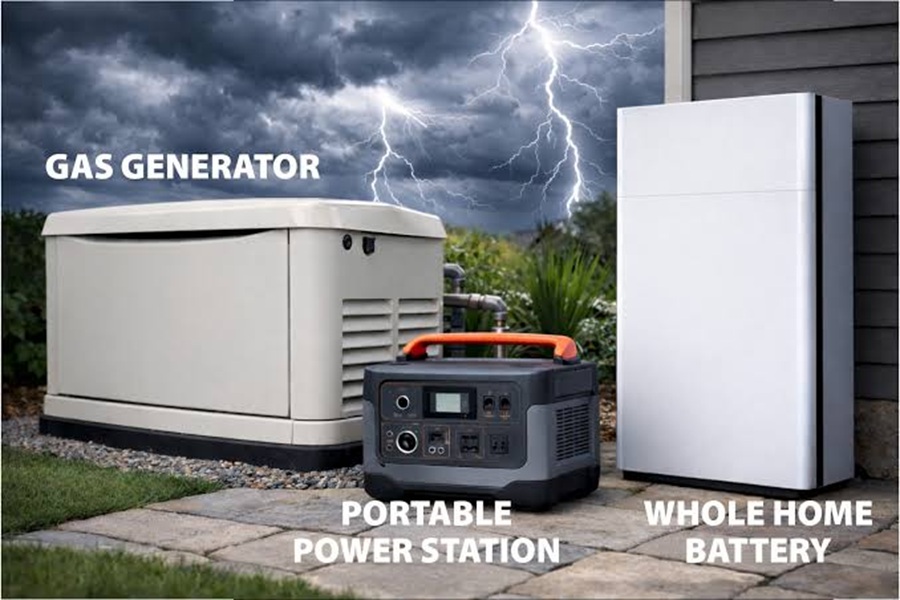
For many homeowners, preparing for extended power outages means purchasing a conventional gasoline generator or installing a whole-home natural gas generator, such as a Generac system. While these are popular solutions, they are not the only options. They also come with disadvantages, including fuel dependence, maintenance requirements, noise, exhaust emissions, and the possibility of fuel shortages during widespread emergencies.
Fortunately, several alternative technologies can provide reliable backup electricity. Some can operate independently for extended periods, while others can be combined to create a home energy system capable of functioning for days, weeks, or potentially longer without utility power.
Options include high-capacity portable power stations, large battery storage systems, portable solar panels, wind turbines, micro-hydro systems, electric vehicles with bidirectional charging capabilities, and other emerging energy technologies.
One particularly interesting option is the high-wattage solar power bank. These devices have improved significantly in recent years, but are they powerful enough to serve as a legitimate alternative to a traditional home generator?
The answer depends on the size of the system, the appliances you need to operate, how much electricity your household consumes, and whether you have a reliable way to replenish the stored energy.
Let's examine the available options and what homeowners should consider before investing.
1. High-Wattage Portable Solar Power Stations
One of the most practical alternatives to traditional generators is a high-capacity portable power station.
These systems are essentially large rechargeable battery banks equipped with built-in inverters, charging controllers, and multiple electrical outlets. Unlike conventional generators, they do not burn gasoline or natural gas to produce electricity. They store electricity and deliver it when needed.
Many models can be recharged using:
• Portable solar panels.
• Standard household electrical outlets before an outage.
• Compatible vehicle charging systems.
• Certain external battery chargers.
• Other approved charging sources.
Popular manufacturers offer systems ranging from relatively small portable units to expandable battery systems capable of storing several kilowatt-hours of electricity.
What can a high-capacity power station operate?
Depending on its inverter rating and battery capacity, a larger unit may operate:
• Refrigerators and freezers.
• Televisions.
• Internet routers and networking equipment.
• Laptop computers and phones.
• LED lighting.
• Fans.
• Small kitchen appliances.
• Medical equipment, where the equipment manufacturer permits battery operation.
• Some well pumps and other motor-driven equipment, provided the inverter can handle their startup requirements.
The biggest advantage is convenience. There is no gasoline to store, no engine oil to change, and no exhaust fumes produced during operation.
A portable power station can also be used indoors, provided it is operated according to the manufacturer's instructions and has no combustion-based charging equipment operating inside the home.
The biggest limitation: Battery capacity
It is important to understand the difference between watts and watt-hours.
• Watts (W): How much power a device can deliver at one time.
• Watt-hours (Wh): How much energy the battery stores.
• Kilowatt-hours (kWh): A larger measurement of stored energy. One kWh equals 1,000 Wh.
For example, a power station rated at 3,000 watts with a 3,000 Wh battery does not provide 3,000 watts continuously for days. At a constant 1,000-watt load, its theoretical runtime would be approximately three hours before accounting for inverter losses.
This is why homeowners should pay attention to both the inverter output and battery capacity when comparing systems.
For extended outages, expandable systems with additional battery modules are generally more useful than small portable units.
2. Are High-Wattage Solar Power Banks a Good Option?
High-wattage solar power banks are absolutely worth considering, but there is an important distinction between a traditional solar power bank and a portable solar power station.
A traditional solar power bank is typically a relatively small battery intended to charge phones, tablets, and other USB-powered electronics. Even when advertised as high-wattage, it usually cannot power major household appliances for meaningful periods.
A portable solar power station is a much larger system designed to provide household-style AC electricity.
Why larger solar power stations are attractive
A properly sized portable solar power station can provide several advantages:
1. No fuel dependency: It can operate without gasoline, diesel, or natural gas when charged through solar panels.
2. Quiet operation: Unlike combustion generators, the battery itself operates silently.
3. Indoor convenience: There are no generator exhaust emissions during battery operation.
4. Renewable recharging: Solar panels can replenish the battery during daylight hours.
5. Expandable capacity: Some systems allow additional batteries to be connected.
6. Portability: Many systems can be moved to different locations or used for camping, RVs, and emergency situations.
What should you look for?
For serious emergency preparedness, consider the following specifications:
Feature What to look for
Battery chemistry LiFePO4 (lithium iron phosphate)
Battery capacity 2–5 kWh or more for a substantial starting system
Inverter output 2,000–5,000 watts, depending on household loads
Solar input High enough to recharge meaningfully during available daylight
Expandability Ability to connect additional battery modules
Inverter type Pure sine wave
Charging options Solar, AC, and compatible vehicle charging
Warranty Clearly documented battery and system coverage
These are planning ranges, not guarantees that a particular system can power an entire home.
The solar panel question
A high-capacity battery is only half the solution. You also need enough solar generation to replenish it.
For example, a 5 kWh battery might be sufficient to power selected household essentials overnight. However, if you consume 5 kWh every day, you need to generate approximately that much energy daily just to replace what you used, plus additional energy to account for charging losses and less-than-ideal solar conditions.
Cloud cover, rain, shading, panel orientation, and seasonal daylight all affect production.
A system with a large battery but insufficient solar charging capacity can eventually run out of electricity during an extended outage.
Verdict: High-wattage portable solar power stations are one of the best alternatives to traditional generators for homeowners who want quiet, low-maintenance backup power. However, they become much more valuable when paired with adequate solar panels and expandable battery storage.
3. Standalone Solar Panels and Home Battery Storage
Another option is installing a dedicated solar and battery system that does not depend on the utility grid.
This is different from a conventional grid-tied solar installation.
A standard grid-tied solar system may shut down during a utility outage unless it includes appropriately designed backup equipment. This is generally done to protect utility workers from unexpected electrical backfeed.
A properly configured off-grid or backup-capable system can continue supplying electricity independently of the utility.
How it works
A typical arrangement includes:
• Solar panels.
• A solar charge controller or compatible hybrid inverter.
• Battery storage.
• An inverter capable of supplying household AC electricity.
• Appropriate electrical distribution and transfer equipment.
During daylight hours, the solar panels generate electricity. The system supplies household loads and charges the batteries with available excess energy.
At night, the batteries provide electricity.
This arrangement can be designed to power selected essential circuits or, with sufficient generation and storage, a much larger portion of the home.
Why this is a strong long-term solution
Unlike a battery that must eventually be recharged from another source, a standalone solar installation can generate new electricity every day.
It is particularly attractive for homeowners who want to reduce their dependence on outside fuel supplies.
However, system design matters enormously. A household with electric heating, central air conditioning, electric water heating, and a large well pump will need considerably more generation and storage than a household primarily operating refrigerators, lights, fans, and electronics.
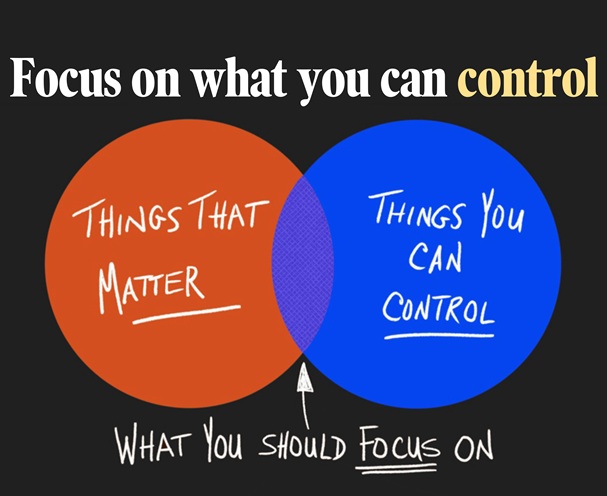
For extended outages, it is often more economical to create an essential-load electrical system rather than attempting to power every appliance in the home.
4. Small Wind Turbines
Wind power is another alternative worth considering.
Residential wind turbines convert moving air into electricity, which can be used immediately or stored in batteries.
Unlike solar panels, wind turbines can potentially generate electricity at night. In areas with consistent wind, they may complement solar power particularly well.
Advantages
• Electricity generation can continue after sunset.
• Wind can supplement solar production during cloudy weather.
• A properly sized turbine can contribute to a battery-based off-grid system.
• Wind generation does not require fuel deliveries.
Disadvantages
Wind energy is highly location-dependent.
A turbine installed in an area with poor wind conditions may produce very little electricity. Trees, nearby buildings, roof turbulence, and surrounding terrain can significantly reduce performance.
Small residential wind turbines also require appropriate mounting structures, electrical protection, maintenance, and compliance with local zoning requirements.
Best application: A property with consistent wind exposure, sufficient space, and a properly engineered installation. Wind is often most effective as a supplement to solar rather than a complete replacement.
5. Micro-Hydro Power
For homeowners with access to a suitable flowing water source, micro-hydro power may be one of the most dependable renewable electricity options.
Unlike solar and wind, a properly designed hydroelectric system can generate electricity continuously, day and night.
A small turbine uses flowing water and available elevation difference to produce electricity.
Why micro-hydro is interesting
A modest water flow can produce a surprisingly useful amount of electricity if there is sufficient elevation difference.
The major advantage is consistency. A suitable stream may generate power around the clock, reducing the amount of battery storage needed.
However, not every creek, pond, or drainage ditch is suitable.
The system requires sufficient water flow and usable head (the vertical drop available to drive the turbine). Seasonal changes, drought, freezing conditions, water rights, and environmental regulations must also be considered.
Best application: Rural properties with a reliable year-round water source and suitable elevation.
For someone with the right property, micro-hydro can be an excellent long-term source of off-grid electricity.
6. Electric Vehicles as Backup Power Sources
An often-overlooked option is using an electric vehicle as a large backup battery.
Some electric vehicles support vehicle-to-load (V2L), vehicle-to-home (V2H), or vehicle-to-grid (V2G) functionality.
These technologies allow electricity stored in an EV battery to power external devices or, with compatible equipment, a home's electrical system.
How much power could an EV provide?
Electric vehicles commonly have batteries that store substantially more energy than portable power stations.
Depending on the vehicle, battery size, usable capacity, and available output, an EV could potentially provide enough electricity to operate selected household loads for several days.
For example, a vehicle with 60 kWh of usable battery energy could theoretically supply 2 kWh of daily household consumption for approximately 30 days. Actual runtime would be lower after conversion losses, reserve requirements, and vehicle limitations.
Important considerations
Not every EV can provide power to a home.
Before relying on this option, verify:
• Whether the vehicle supports bidirectional power.
• Whether the required home integration equipment is available.
• Whether the vehicle supports the necessary output voltage and power.
• Whether the vehicle manufacturer permits the intended use.
• Whether the system has a safe, approved electrical transfer arrangement.
An EV can be a valuable emergency energy reserve, especially for homeowners who already own one.
7. Fuel Cells and Emerging Energy Storage Technologies
Fuel cells are another technology worth watching.
Rather than burning fuel in a conventional engine, a fuel cell produces electricity through an electrochemical process.
Hydrogen fuel cells, for example, combine hydrogen and oxygen to produce electricity, with water and heat as byproducts.
Fuel cells can provide continuous electrical output as long as an adequate fuel supply is available.
However, residential fuel-cell systems are not yet as straightforward or widely accessible as battery storage or solar installations. Hydrogen storage, fuel availability, cost, and equipment complexity are important limitations.
For most homeowners, fuel cells are better viewed as an emerging alternative than an immediately practical replacement for conventional backup power.
8. Using Biomass and Wood for Household Energy
There is another category of emergency energy that homeowners should not overlook: biomass.
Wood-burning stoves, pellet stoves, and other biomass heating appliances can provide heat without depending on the electrical grid, although some modern pellet stoves require electricity for controls, fans, and fuel delivery.
This does not necessarily generate electricity, but it can substantially reduce the electrical demand placed on a backup battery system.
For example, if a household can heat its living space using a properly installed wood stove, it may not need to dedicate a large portion of its battery capacity to electric heating.
Some specialized biomass systems can generate electricity, but these are generally more complex and less practical for ordinary residential backup applications.
The larger lesson is that reducing electrical demand can be just as important as increasing electrical production.
9. Combining Multiple Energy Sources: The Most Reliable Strategy
For homeowners concerned about outages lasting weeks rather than hours, relying on one technology may not be the best approach.
A combination of energy sources can provide greater reliability.
For example, a property could use:
• A large LiFePO4 battery bank for energy storage.
• Solar panels for daytime electricity generation.
• A small wind turbine where wind conditions are favorable.
• An electric vehicle as an additional emergency battery, if compatible.
• A wood stove or other independent heating source to reduce electrical consumption.
This creates multiple layers of energy resilience.
If cloudy weather reduces solar production, wind may help compensate. If neither source generates sufficient electricity, stored battery capacity provides a reserve.
The key is to build a system around actual energy consumption rather than purchasing equipment based solely on advertised wattage.
10. How Much Electricity Does Your Home Actually Need?
Before choosing any backup system, determine which appliances you absolutely need during an extended outage.
Here is an illustrative example of essential electrical loads:
Appliance Estimated daily consumption
Refrigerator 1.5 kWh
Chest freezer 0.8 kWh
LED lighting 0.3 kWh
Internet equipment 0.3 kWh
Phones and laptops 0.3 kWh
Fans 1.0 kWh
Miscellaneous small devices 0.5 kWh
Total 4.7 kWh/day
These figures are examples, not universal appliance ratings. Actual consumption depends on equipment efficiency, usage, temperature, and operating conditions.
This household would need approximately 4.7 kWh of usable electricity daily.
For three days without recharging, that means approximately 14.1 kWh of usable stored energy, before accounting for inverter losses and additional reserves.
For seven days, it would require approximately 32.9 kWh.
This is why a small portable power station, despite having a high wattage rating, may not be sufficient for extended household emergencies.
11. What About Heating, Air Conditioning, and Well Pumps?
These are among the most important considerations when planning an extended backup system.
Refrigerators, lights, and electronics are relatively manageable loads. Central air conditioning, electric heating, water heaters, and well pumps can require substantially more power.
For example:
• Central air conditioning may require several thousand watts while running, with potentially higher startup demands.
• Electric resistance heating can consume enormous amounts of electricity.
• Well pumps may have significant motor startup requirements.
• Electric water heaters can quickly deplete a battery bank.
Homeowners should consider alternative ways to handle these demands.
Examples include:
• Using ceiling fans and efficient portable fans instead of central air conditioning.
• Installing a wood stove for supplemental heating.
• Using passive ventilation and shading to reduce cooling requirements.
• Heating water through a separate appropriately installed system.
• Storing water in advance when practical and maintaining a safe backup water supply.
A smaller backup system designed around essential loads can often provide much longer runtime than a system attempting to operate the entire home.
12. Safety and Installation Considerations
Alternative power systems still require proper electrical design.
A battery system connected to household wiring must use appropriate equipment to prevent dangerous backfeeding into utility lines.
Never connect a portable power station or generator to a household outlet using a homemade male-to-male cord.
Use manufacturer-approved home integration equipment, properly rated transfer equipment, and a qualified electrician where required.
Other considerations include:
• Proper battery ventilation and temperature limits as specified by the manufacturer.
• Appropriate overcurrent protection.
• Correct cable sizing.
• Grounding and bonding requirements.
• Weatherproof outdoor connections.
• Protection against flooding and extreme temperatures.
• Compliance with applicable electrical and building codes.
Even though battery power stations do not produce combustion exhaust during normal operation, they should be protected from water, physical damage, overheating, and improper charging.
Combustion-based equipment, including vehicle engines and any auxiliary fuel-powered equipment, must always be operated outdoors and away from openings to prevent carbon monoxide poisoning.
Conclusion: Can You Keep Your Home Powered Without a Traditional Generator?
Absolutely.
The technology available today gives homeowners several ways to maintain electricity during extended outages without relying on a traditional gasoline generator or a natural gas whole-home generator.
High-capacity portable solar power stations are among the most accessible starting points. They are quiet, relatively simple to operate, and can be expanded with additional battery storage and solar panels.
Standalone solar and battery systems offer a more substantial long-term solution. Wind and micro-hydro can provide additional renewable generation where conditions permit. Electric vehicles may offer another valuable source of stored electricity.
The most important consideration is understanding the difference between having enough power to operate an appliance and having enough stored energy to operate it for several days.
A 3,000-watt power station might run several appliances simultaneously, but its battery capacity determines how long those appliances can operate. Likewise, a large battery bank is only a sustainable long-term solution if there is a reliable way to recharge it.
For homeowners who want genuine energy independence, the strongest approach is often a combination of efficient appliances, substantial battery storage, renewable energy generation, and a carefully planned essential-load electrical system.
Rather than simply asking, "What generator should I buy?" homeowners should start asking a more important question:
How can I create a home energy system that continues supplying electricity even when the utility grid is unavailable for an extended period?
That shift in thinking opens the door to a much wider range of options and, potentially, a more sustainable and resilient home.
 77653