NewStori...First & Foremost A Quality News Outlet!
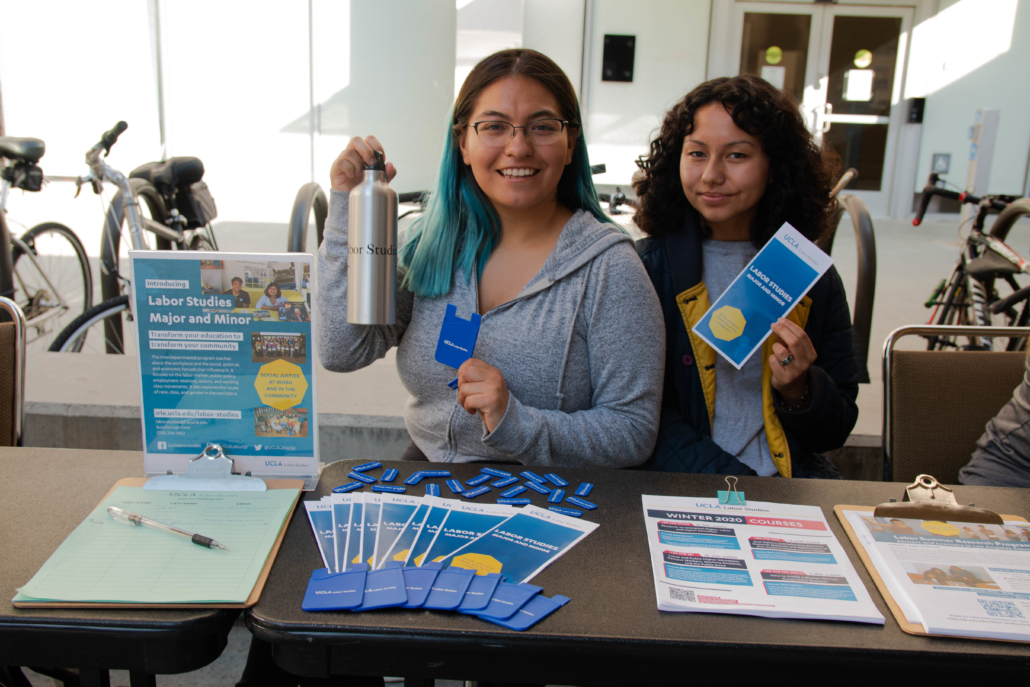
In an era where job markets shift rapidly and industries evolve at lightning speed, traditional pathways from education to employment are no longer the only routes to success. Whether you’re an undergraduate exploring majors, a graduate pursuing advanced knowledge, or a career changer pivoting into a new field, self paced career journeys have become essential engines of professional growth. These journeys allow individuals to chart personalized learning paths, build skills incrementally, and stay adaptable regardless of life stage. This is especially valuable at research intensive, world class institutions like the University of California, Los Angeles (UCLA), where academic diversity and employer engagement intersect to shape future leaders.
Why Self Paced Career Journeys Matter
A self paced career journey isn’t just about learning at your own speed — it’s about empowering yourself to respond to shifting industry needs with confidence. Here’s why this approach has become so critical:
1. Flexibility in an Uncertain World
Modern careers rarely follow linear, predictable trajectories. Technological disruption, economic fluctuation, and globalization mean that skills once considered cutting edge can become outdated quickly. Self paced learning — whether through online courses, internships, research, or targeted certifications — enables learners to upgrade their competencies on demand. This adaptability is vital for students preparing to enter competitive job markets and for professionals seeking lateral moves or complete re skilling.
For career changers, self paced pursuits offer a low risk way to explore new interests before making substantial commitments. It enables you to test the waters in new fields, validate your fit, and build a portfolio or experience that makes you marketable to employers.
2. Personalized Learning & Deep Skill Acquisition
Everyone learns differently. Self paced career journeys honor that by letting individuals tailor their learning based on interests, goals, and available time — something that rigid semester schedules or workplace training programs rarely allow. This personalized approach encourages deeper learning, better retention, and the ability to directly connect personal interests with marketable skills.
For students at UCLA, this can mean combining formal coursework with hands on research, internships, student organizations, and real world projects to build a portfolio that expresses both depth and breadth of capability.
3. Confidence Through Ownership
Taking control of your career path boosts confidence. When you choose what skills to build and how to build them, you gain self efficacy — a belief in your ability to impact your professional trajectory. This sense of ownership is particularly empowering for those entering the workforce for the first time as well as mid career professionals who want to refresh or pivot their professional identities.
Top 5 Degree Programs at UCLA — And Why They Matter
UCLA offers one of the widest arrays of degree programs in the United States, spanning the arts, sciences, engineering, business, and more. Rankings and completion data suggest several programs are both popular and impactful in terms of career outcomes.
Here are five impactful degree paths often pursued by Bruins with strong professional prospects:
Computer Science & Engineering
• Focus: Software development, algorithms, systems design, artificial intelligence, cybersecurity.
• Program Page: https://catalog.registrar.ucla.edu/major/2021/computerscienceandengineeringbs
• Why It Matters: As technology transforms every industry, computer science and engineering majors are in unprecedented demand. These students often find careers in software, finance, biotech, gaming, and consulting — with many landing roles before graduation. The analytical and problem solving skills learned here are foundational for both technical and leadership positions.
Moreover, UCLA routinely attracts tech companies and major engineering employers at career fairs and networking events, helping students transition smoothly into the tech sector.
Business Economics (or Related Business Focused Majors)
• Focus: Market analysis, finance, business strategy, economic modeling.
• Program Page: https://admission.ucla.edu/apply/majors (look for Economics/B.A. and Business Economics/B.A.)
• Why It Matters: Programs that blend economics and business principles prepare students for careers in consulting, finance, analytics, and management roles. The business mindsets cultivated in these majors — data literacy, strategic thinking, and leadership — are relevant across industries and especially valued in corporate recruiting.
Business economics graduates often leverage internships, consulting projects, and part time roles to accelerate their self paced career pathways.
Psychology & Behavioral Sciences
• Focus: Human behavior, cognition, clinical principles, research methodology.
• Program Page: https://admission.ucla.edu/apply/majors
• Why It Matters: Understanding human behavior is relevant in every sector — from clinical settings to tech product design, marketing, and HR roles.
Psychology majors build critical thinking, research, and communication skills that serve both graduate education and industry work. These skills are especially useful for professionals considering roles in education, counseling, human resources, or UX research.
A self paced journey here might include volunteer experiences, research lab work, or certifications in counseling or data science.
Econometrics & Quantitative Economics
• Focus: Statistical analysis, data interpretation, economic modeling.
• Program Page: https://admission.ucla.edu/apply/majors
• Why It Matters: With the growing importance of data in decision making, quantitative economics empowers students to analyze trends, perform forecasting, and support strategic planning across economics, finance, policy, and tech sectors. This blend of quantitative and theoretical knowledge gives students a competitive edge.
Students often use self paced learning to build additional data science or programming skills (e.g., Python, R), which complements their degree and heightens employability.
Biological Sciences / Biology
• Focus: Genetics, cell biology, ecology, molecular biology, biomedical research.
• Program Page: https://admission.ucla.edu/apply/majors
• Why It Matters: This major lays the foundation for careers in healthcare, research, biotechnology, and environmental sciences. Students interested in medicine, research labs, public health, or biotech entrepreneurship often expand their UCLA coursework with hands on research, volunteering, and biotech internships.
Biological sciences are often paired with self directed experiences like lab apprenticeships, independent research projects, and industry certifications to enhance career readiness.
Top 3 Things to Keep in Mind on a Self Paced Career Journey
No matter your major or career stage, these insights will help you navigate your self paced journey more effectively:
1. Start With a Clear Vision — Then Be Ready to Pivot
A clear sense of where you want to go helps you choose meaningful skills and experiences. But equally important is flexibility. Industries evolve, and job roles shift. Your career path should be a roadmap, not a rigid rulebook. Set goals, but be open to detours that build unexpected strengths.
For students and career changers alike, this means periodically revisiting your goals, assessing progress, and adjusting based on industry trends and personal growth.
2. Connect Learning With Practice
Learning alone isn’t enough. Translate your knowledge into projects, internships, part time roles, or extracurricular engagements — all of which help you demonstrate competence to employers. UCLA students, for example, supplement their majors with internships listed in Handshake (the university’s career platform) and participate in career fairs where employers actively recruit for internships and full time roles.
Hands on experiences not only deepen understanding, they also accelerate professional network building — often the key to unlocking job opportunities.
3. Build Professional Networks Proactively
Career fairs, workshops, alumni events, and industry engagements are crucial touchpoints for expanding your professional circle. At UCLA, multiple career fairs occur throughout the year — from broad fairs like the Bruin Career Connections Fair that attract diverse industries, to specialized events such as business, engineering, or industry specific recruiting sessions.
Companies that attend these events can include large consulting firms, major tech and finance companies like McKinsey & Company, Bain & Company, KPMG, Mercer, MUFG, and others in banking, management, and analytics. (Undergraduate Business Society) Employers also vary from engineering and tech firms to public sector roles and nonprofit organizations — giving diverse majors and interests opportunities to connect.
Networking is about more than handing out resumes; it involves engaging in meaningful conversations, asking questions, following up with contacts, and building mentorship relationships that support long term career growth.
Companies That Often Attend UCLA Career Fairs
While the exact roster at any given UCLA career fair varies year to year, many major firms and employers participate regularly — especially through platforms like Handshake, CertificationPoint, Riipen which lists recruiting events, provide experiential learning and work experience builder opportunities and employer participants. They typically range across sectors including:
• Consulting & Business Services: McKinsey & Company, Bain & Company, KPMG, Mercer, Alvarez & Marsal.
• Finance & Banking: MUFG and others recruiting analysts and finance professionals.
• Engineering & Tech: Large engineering fairs attract companies recruiting engineers and technical graduates; specialized engineering fairs include firms such as Kimley Horn, CDM Smith, LADWP, HNTB, and others focused on major projects.
• Public Sector & Nonprofit: Many career fairs, especially at schools like Luskin Public Affairs, include government agencies and nonprofits.
• Various Industries: Career events tailored to business or interdisciplinary fields also connect students to diversified employers looking for talent in marketing, HR, operations, and analytics.
These fairs help expose students and career changers alike to opportunities they might not otherwise encounter, making them valuable complements to academic and self paced learning.
Concluding Thoughts
A self paced career journey puts you in the driver’s seat of your future — whether you’re still in school, graduating soon, or transitioning from another profession entirely. By combining academic rigor with adaptability, experiential learning, and proactive networking, you can build a career that aligns with your aspirations and the demands of a dynamic job market.
At institutions like UCLA, where academic excellence meets robust employer engagement, the opportunities are boundless — but success still has to be earned. Use the flexibility of self paced pathways to deepen your skills, explore industries, and build professional confidence that drives long term success.
Whether you choose computer science, economics, psychology, biology, or any other field, remember: your career journey is uniquely yours — and with intentional planning and active engagement, you can shape it into something remarkable.

Reports reach us from Florence, Antwerp, and beyond of a remarkable stir among painters, sculptors, and other masters of the arts. These practitioners, it is said, no longer confine themselves solely to sacred depictions or the customary portraits of nobles. Rather, they now strive to depict the passions, virtues, and struggles of men and women, and to reflect the manifold conditions of life within city, court, and countryside.
In Florence, young painters experiment with the expression of grief, joy, and contemplation upon the human face, seeking to render not only the likeness but the very disposition of the soul. Sculptors in Rome similarly pursue new forms of the body, capturing vigor, repose, and the trials of labor with unprecedented fidelity. Observers marvel that such works reveal truths of the heart that words alone fail to convey.
Furthermore, these masters are not content with the imitation of antiquity alone. They now turn their hands toward scenes of common life: merchants in the marketplace, children at play, and humble households at prayer or labor. In doing so, they present the world as it is lived, offering both delight and reflection to those who view their works.
Some writings suggest that these artistic endeavors engage with the condition of society itself, questioning the manner of governance, the excesses of the wealthy, and the burdens upon the laboring folk. Through brush, chisel, and ink, the conscience of the age may be stirred, prompting both judgment and admiration.
Critics and patrons alike debate the value of such works. Traditionalists argue that art should preserve the sacred and noble forms of the past, while others proclaim that this new manner of painting and carving illuminates the truth of life and spirit more fully than ever before. In city halls, chapels, and private homes, the conversation over these expressions continues with vigor.
Thus, it appears the present age is one of artistic inquiry and revelation, wherein painters, sculptors, and their fellow artisans strive to explore identity, emotion, and the condition of humankind. Through their skill, the world may glimpse not only beauty and grace but also the deeper passions and social truths that shape our shared experience.